Programme

Timeline

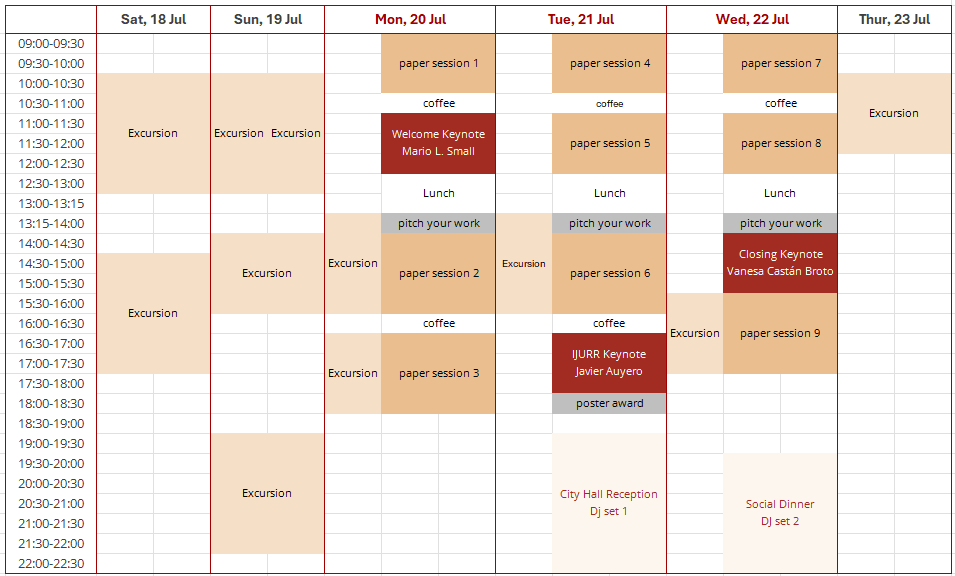
This timeline was last updated on 30 March, 2026.

2025
2026

Stay up to date with our Conference App!

With the Guidebook App you always have the current Conference programme at hand and will receive updates directly on your smartphone.

Stay up to date with our Conference App!

Preliminary Programme Overview

Keynotes

Reflecting on three decades of social scientific inquiry, this talk examines the many reasons why urban research still needs ethnographic fieldwork to understand and explain the making (and potential unmaking) of inequality and marginality. The talk focuses on three specific topics that should command the systematic and granular attention of urban researchers: poor people’s strategies of persistence, dark governance, and successful grassroots initiatives.

Over the last two decades, scholarly debate has focused on the role that cities and urban areas play in developing transformative responses to climate change and resilience challenges. This debate has shifted the narrative away from characterising cities as sites of vulnerability, reimagining them as engines of transformative responses to global challenges. Urban climate action includes experiences such as the integration of emission mitigation concerns into urban design, the development of local adaptation planning, the implementation of measures to deliver infrastructure resilience, the turn towards urban greening strategies, and the enrolment of a wide set of actors from the public, private and civil society spheres who are transforming cities in the name of climate change.

However, such transformations are not inherently positive: unequal access to the benefits of climate action and a lack of voice in local governance generate the spatial injustices that underpin growing discontent with urban climate policy. Climate urbanism emerges as a critical approach to analyse climate change responses within urban environments. It asks: how can the identification of complex socio-spatial impacts of urban climate action imaginaries help develop new forms of engagement with urban environments characterised by uncertainty and unknowability? Using examples from a three-year action research project in collaboration with the Homeless People’s Federation of the Philippines and allied partners, I will argue for paying close attention to the strategies that emerge from mundane interactions between urban living and environmental change.

The social sciences are in the midst of a revolution in access to data, as governments and private companies have accumulated vast digital records of rapidly multiplying aspects of our lives and made those records available to researchers. The accessibility and comprehensiveness of the data are unprecedented. How will the data revolution affect the study of social inequality? I examine the new opportunities and limitations of new availability of data and technology on our ability to answer important questions in urban inequality, based on ongoing empirical research on neighborhoods and economic inequality.

Keynote Speakers

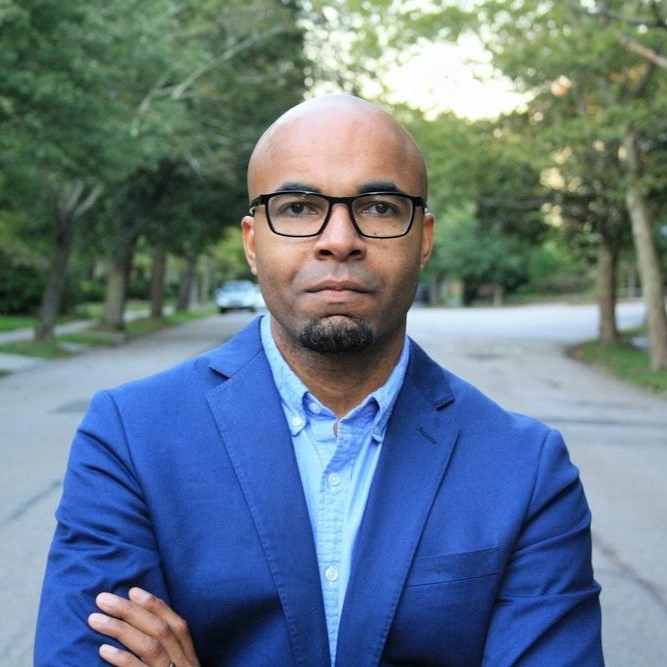
Portrait Photo of Javier Ayuero

Javier Auyero

College of Liberal Arts,

University of Texas at Austin

Javier Auyero is the Joe R. and Teresa Lozano Long Professor in Latin American Sociology at the University of Texas-Austin and Ikerbasque Research Professor at the University of the Basque Country. His main areas of research, writing and teaching are urban poverty, political ethnography, and collective action. He is the author of many books among them Poor People’s Politics, Patients of the State, and (together with anthropologist Débora Swistun), Flammable. Environmental Suffering in an Argentine Shantytown. His most recent book is Squatter Life (co-authored with anthropologist Sofía Servián). More than a decade ago Javier founded the Urban Ethnography Lab at UT-Austin, and he is the current editor of the book series Global and Comparative Ethnographies at Oxford University Press.
Javier Auyero will hold the IJURR Lecture at the RC21 Conference in Vienna.

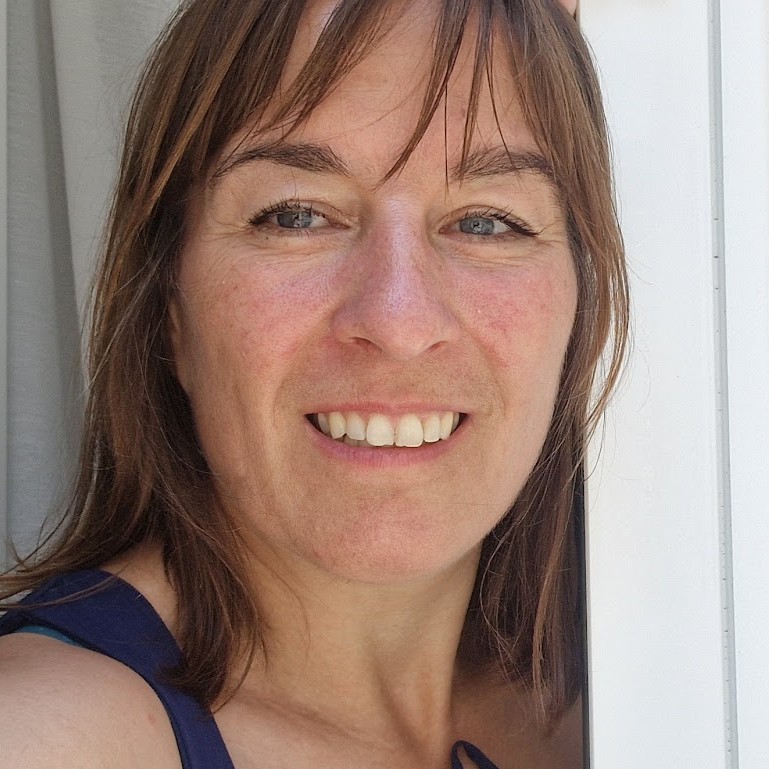
Portrait Photo Vanesa Castán Broto

Vanesa Castán Broto

Urban Institute,

University of Sheffield

Vanesa Castán Broto has dedicated her academic career to understanding the effectiveness and fairness of place-based responses to climate change in rapidly changing environmental and political contexts. She is currently a Professor of Climate Urbanism at the Urban Institute, University of Sheffield, where she directs the multi-partner project JustGESI (Gender Equality and Social Inclusion for a Just Energy Transition), funded by the UKRI Ayrton Fund. Her last book is entitled Community Energy and Sustainable Energy Transitions (2024, Palgrave).

Portrait Photo Mario L. Small

Mario L. Small

Department of Sociology,

Columbia University
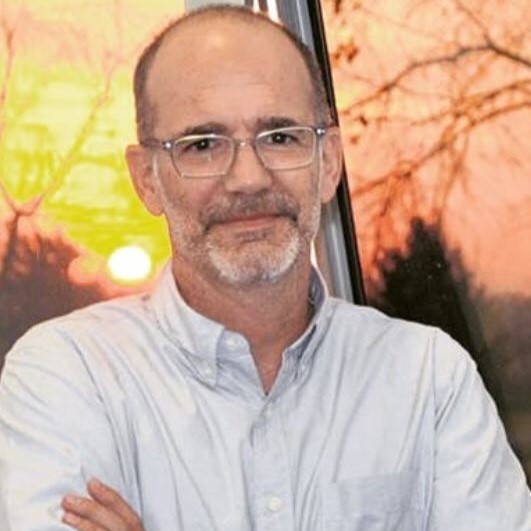
Mario L. Small, Ph.D., is Quetelet Professor of Social Science at Columbia University, a University of Bremen Excellence Chair, and an elected member of the National Academy of Sciences and other academic societies. Small has published award-winning articles and books on urban inequality, personal networks, and the relationship between qualitative and quantitative methods. His books include Villa Victoria: The Transformation of Social Capital in a Boston Barrio; Unanticipated Gains: Origins of Network Inequality in Everyday Life; Someone To Talk To: How Networks Matter in Practice; and the co-authored Qualitative Literacy: A Guide to Evaluating Ethnographic and Interview Research. Small is currently studying the the ability of large-scale data and new technologies to answer critical questions about urban inequality.

Innovative sessions

Session chair

Gabriel Silvestre (Newcastle University)

Discussants

Francisco Comaru (Universidade Federal do ABC)
Hanna Hilbrandt (ETH Zürich)

Session type

Film Screening

Description

A Place in the City explores urban struggles and grassroots resistance across Latin America, centring on the lived experiences of communities in Argentina, Brazil, and Chile. Blending audiovisual storytelling with academic commentary and archival research, the documentary prompts reflection on the politics of urban space, housing, and collective action.

Produced through a collaboration between the Contested Territories research project and Fundación Ciudades sin Miedo (Argentina), the film interweaves interviews with activists, residents, and scholars. Several academic contributions were recorded during the most recent RC21 meeting in Santiago, creating a direct link between the film and the RC21 community. These reflections offer theoretical grounding for the lived experiences depicted, enriching the narrative with insights into urban governance, housing precarity, and grassroots forms of resistance.
 
The documentary traces how communities confront displacement, negotiate with state institutions, and mobilize to reclaim urban space. It highlights the role of social movements in imagining and shaping alternative urban futures, adopting a transnational perspective on urban prefiguration and the politics of everyday life. Through an intersectional lens, the film foregrounds the experiences of women, migrants, and racialized groups, showing how struggles over housing and territory are embedded within broader structures of inequality.
 
A Place in the City (2025)
Duration: 61 minutes
Director: Gabriel Silvestre
Producers: Contested Territories; Fundación Ciudades sin Miedo
Languages: English, Spanish, Portuguese
Subtitles: English

Session chairs

Penny Travlou (University of Edinburgh)
Marina Toneli Siqueira (Federal University of Santa Catarina)

Session type

Lightning talk

Description

This session builds on the Special Feature “Decolonising Urban Knowledge(s)” (Ortiz, Travlou, Siqueira & Testori, 2025), which emerged from panel discussions at RC21 Athens 2022. Over the past three years, the urgency of these debates has grown: urbicides and genocides are erasing urban spaces, while grassroots movements in the Global South have intensified resistance against capitalism, coloniality, and multiple forms of discrimination (Graham, 2004; Escobar, 2018). In this context, decolonising urban knowledge(s) is more urgent than ever.

Ortiz et al. (2025) argue that urban scholarship has historically reinforced Western dominance in understanding city-making. The Special Feature brings together contributions confronting the epistemic violence of coloniality through practices emerging in ordinary cities. Decolonising knowledge involves opposing the intersecting violences shaping racialised, subaltern, and marginalised lives, reimagining knowledge production through ethics of care and reciprocity, and expanding plural pedagogies and pluriversal designs (Ortiz et al., 2025).

This reflection aligns with RC21 Vienna 2026’s theme, “Inequalities and the City. Old Issues, New Challenges.” Urban inequalities are produced not only through economic and political processes but also through epistemic hierarchies that structure how cities are studied and imagined (Grosfoguel, 2011; Caldeira, 2017). Decolonising urban knowledge is essential to rethink frameworks and strategies to address persistent and emerging inequalities, highlighting plural epistemologies from grassroots struggles as critical tools (Escobar, 2018).

The session features one extended lightning talk by the editors, followed by a structured conversation with contributors and the audience. The talk revisits three key themes:

1. Coloniality and Urban Knowledge: How urban scholarship reproduces epistemic hierarchies and how these can be unsettled.

2. Violence, Erasure, Resistance: How urbicide, genocide, and structural violence erase knowledge, and how urban movements resist these dynamics.

3. Towards New and Alternative Horizons: How politics of care, reciprocity, pluriversal designs, and disruptive pedagogies inform methodological and pedagogical change (Ortiz et al., 2025; Escobar, 2018).

The moderated conversation will focus on how decolonising urban knowledge(s) can inform both theory and practice, articulating shared principles and directions for scholarship and activism. By combining a provocative lightning talk with an interactive dialogue, this session engages participants in rethinking how urban knowledge is produced and mobilised amid persistent inequalities, violent erasures, and transformative struggles.

References

Caldeira, T. (2017). Peripheral urbanization: Autoconstruction, transversal logics, and politics in cities of the Global South. Environment and Planning D: Society and Space, 35(1), 3–20.

Escobar, A. (2018). Designs for the Pluriverse: Radical Interdependence, Autonomy, and the Making of Worlds. Duke University Press.

Graham, S. (2004). Cities, War, and Terrorism: Towards an Urban Geopolitics. Wiley-Blackwell.

Grosfoguel, R. (2011). Decolonizing Post-Colonial Studies and Paradigms of Political-Economy: Transmodernity, Decolonial Thinking, and Global Coloniality. Transmodernity, 1(1), 1–38.

Ortiz, C., Travlou, P., Siqueira, M., & Testori, G. (2025). Decolonising urban knowledge(s): An ordinary imperative in extraordinary times. City, 29(3-4), 485–501.


Round Tables

Chairs/Moderators

David Kaufmann (ETH Zürich)
Mona Fawaz (American University of Beirut)

Round table participants

Jonathan Darling (Durham University)
Liza Weinstein (North Eastern University)
René Kreichauf (Vrije Universiteit Brussel)
Dolf te Lintelo (Research Fellow, Institute of Development Studies)

Description

Driven by humanitarian discourses that frame forced displacement as exceptional within a state-centric reading of population movements, much of the urban scholarship has adopted a crisis framing in its approach to refugee migrations. Consequently, studies investigating the urbanization of forced displacement have tended to approach refugee populations, their practices, governance, and the responses to their settlement in isolation of other forces that shape today’s cities. However, most urban refugees inscribe themselves in cities alongside other vulnerable urban populations: They access shelter as tenants through the channels of informal housing markets, work as precarious labor, and sometimes negotiate visibility and political identities through the “weapons of the weak” (Scott 1996). Moreover, the conditions urban refugees face, the possibilities they find, and the restrictions they endure are shaped by the same forces that shape today’s cities.

This roundtable brings together scholars working on the intersection of forced displacement with urbanization in multiple national and regional contexts. The roundtable approaches displacement as an integral part of the unfolding processes that have historically shaped cities and continue to produce contemporary urbanization. Through critical engagement with existing scholarships and practice, participants will explore how refugee arrival and settlement intersect with processes such as housing and land financialization, neoliberal governance, gray-spacing, the militarization of security, climate change, or the rise of right-wing populist politics. The roundtable seeks to foster comparative dialogues cross-city through grounded discussions of methods, theoretical framings, and case studies particularly focused on the complex intersections of housing, displacement, and urban transformation, drawing connections across Global North and Global South settings.

Key questions include:

  • How are modalities of housing tenure open to refugees influenced by the changing nature of housing markets (e.g., housing financialization, adoption of platforms in housing markets)
  • How does the arrival of urban refugees reorganize existing urban social hierarchies, particularly landlord-tenant relations?
  • How and why are diverse actors (e.g., State actors, NGOs, IOs, FBOs, business) sometimes cooperating together in urban refugee policies and practices?
  • How do humanitarian shelter interventions reverberate through local housing markets, and what unforeseen linkages, opportunities, or exclusions do they generate?
  • How do decades of neo-liberal economic policies affect the abilities of local authorities to respond to displacement?
  • How does the rise of right-wing populist movements influence the governance of displacement and refugees’ ability to negotiate pathways of urban integration?
  • How can we locate contemporary humanitarian responses in the context of historical policies that have governed forced displacement?

Chairs/Moderators

Mona Fawaz (American University of Beirut)
Hiba Bou Akar (Columbia University)

Round table participants

Daniel Agbiboa (Harvard University)
Sobia Kaker (University of Essex)

Description

“The master’s tools will never dismantle the master’s house,” Audrey Lorde warned us. For urbanists, and more generally academics and members of institutions of higher learning, this provocation carries renewed urgency. The methods, categories, and interventions that define our disciplines, particularly urban planning and design, have been and remain deeply implicated in the conception, implementation, and consolidation of settler colonialism in Palestine, both past and present. Whether through practices of spatial planning, forms of biopolitical governance, or modes of attributing value, academic research has been complicit in justifying and supporting erasure (Yiftachel 2000). This panel invites contributions that interrogate the liberatory possibilities and limits of our disciplinary tools at a time when genocide and erasure are unfolding across Gaza, the West Bank, and beyond.

Building on long-standing critiques of the academy’s complicity in imperial and colonial projects, we ask: How might urbanists reckon with its own intellectual architectures, its theories of space, development, and governance that reproduce domination and dispossession? Is it possible to find liberatory tools within practices that have already solidified oppression, displacement, and control? If so, how can we rethink these tools, and how can we shift the discourse around them to open space for justice, resistance, and collective repair? What responsibilities do we bare as scholars situated within institutions and epistemologies entangled with empire? Beyond complicity, what solidarities and aspirations can we offer?

The round table will bring critical, reflexive, and politically committed interventions that engage with the urban as a site of both colonial violence and potential liberation.

Chairs/Moderators

Fiorenza Gamba (University of Geneva, Switzerland)

Round table participants

Sandro Cattacin (University of Geneva, Switzerland)
Vincent Kaufmann (École Polytechnique Fédérale de Lausanne, France)
Mark Vacher (University of Copenhagen, Denmark)
Letteria Grazia Fassari (Sapienza University of Rome, Italy)
Adrian Favell (University College Cork)

Description

Cities are characterised by pluralism. This fact is becoming increasingly relevant in the practice of urban governance and planning. The handling of differences and vulnerabilities is usually based on an understanding that favours or privileges only one individual feature (such as income) and addresses only specific groups. This produces a restrictive understanding of differences and vulnerabilities, that imposes exclusive features on individuals or groups, thereby simplify complex identities and reduces inequalities to a limited extent.
Individualisation, anarchic community building, mobility and globalisation – and all the current multiplies crisis – are all changing cities and challenging the traditional modus of governing collective spaces (Sassen 2002).

The contemporary trend is toward differentiation and increasing complexity (von Beyme 1992) – toward singular complex (intersectional) identities rather than larger, homogeneous group identities (Cho et al. 2013) – and a focus on the heterogeneity of people living in the same territories, in particular urban ones (Pattaroni 2006; Vertovec 2007; Tasan-Kok et al. 2013).
This heterogeneity and complexity challenge the conceptual categories and analyses that have long been employed in the social sciences, encouraging us to to venture into uncertain and “imperfect” territory (Le Galès and Robinson 2024).

There are various loci from which to examine how such complexity can be managed. One such locus is the organisation of urban spaces and urban mobility. There are also different ways to study how cities deal with contemporary challenges. One of these is to take into consideration how differences embodied in contemporary societies are shaped by and framed in contemporary urban contexts. The increasing differentiation in modern societies is most pronounced in cities, especially in urban areas with a highly mobile population (Viry and Kaufmann 2015). Cities attract people from all over the world with diverse origins, religious practices, socioeconomic statuses and everyday practices (Cattacin 2009), and modern cities and their governance are forced to respond to this heterogeneity and demographic change. Although policies regarding, for instance, social security or health needs are usually made at the national level, cities offer an interesting context for the investigation of territorialised practices, because they are confronted with highly diverse lifestyles and specific vulnerabilities, which can turn rapidly on inequalities, and are therefore especially affected by the question of the inclusion of differences. It is also in urban areas that we see a concentrated mobilisation of special resources and innovative, specialised infrastructure implemented at the local level and supported through the participation of all sorts of stakeholders to better respond to the needs of a highly differentiated population (Cattacin 2011). This also has the effect of tackling inequality.

In this roundtable we will discuss with our guests, and then open to audience, on the concepts and practices adopted by cities to deal with these differences and to develop new approaches to planning and thinking the city that promote the inclusion of specific vulnerabilities and, in general, differences.

Chairs/Moderators

Tomáš Hoření Samec (Faculty of Architecture, Brno University of Technology; Institute of Sociology of the Czech Academy of Sciences)
Luise Stoisser (Society and ageing research lab)

Round table participants

Darinka Czischke (Delft University of Technology – TU Delft)
Jan Malý Blažek (Brno University of Technology)
Lucia Chaloin (University Grenoble Alps)
Vattani Saray-Delabar (Université Gustave Eiffel)

Description

In recent years, collaborative housing has been adopted as an umbrella term describing forms of housing which accentuate self-organisation, collectivity, and sharing in housing provision. The reasons for developing these forms are often related to inequalities and inadequacies in terms of access to (urban) housing markets, environmental challenges, or social isolation. Existing research shows that many contemporary collaborative housing projects emerge as a response to increasingly financialized housing systems, which are predominantly based on individual private homeownership or rental housing. The former being increasingly less acceptable for market-newcomers of younger age and lower-incomes while the later being often linked to a variety of housing disadvantages and precarities. However, while collaborative housing presents a promising innovation in housing provision, it has also been critiqued as potentially too exclusive or constrained by the formal criteria set up by stakeholders (e.g., municipalities) who provide public support (such as long term land lease).

The aim of this round table is twofold: on the one hand, we will discuss how (in)equality is manifested and (re)produced in collaborative housing following-up on the recent vigorous debates on the character of housing and urban inequalities, insecurities and disadvantages; on the other, we want to offer a hopeful, yet critical, account on how collaborative housing may serve to mitigate various and often intersecting inequalities. We aim to provide an account which brings the perspectives from the Northern Western, Central-Eastern and Southern Europe perspectives and finds bridges across the variety of geographical settings and urban scales from major cities such as Vienna or Brussels to the more locally oriented ethnographic research in Italy, Portugal or the Czech Republic.

Next to highlighting the potential of collaborative housing, we aim to discuss (1) tensions arising between formal inclusion criteria set by city governments (e.g., income limits) and inclusion criteria agreed upon by residents (e.g., proportion of LGBTQ+/older residents) in collaborative housing groups that work together with institutional stakeholders, such as social housing organisations; (2) relational aspects of (in)equalities which present the various housing hierarchies as a dynamic interplay between civic, public and private stakeholders with often contingent results as manifested in (3) contradictions embedded in top-down projects that, on the one hand, tend to prioritize the housing inclusion of vulnerable groups reducing social inequalities they experience, and on the other hand, produce wider inequalities of power between institutional actors initiating these projects and the residents.

Session chairs

Michael Janoschka (Karlsruhe Institute of Technology (KIT))

Description

Across Europe, the cost of housing has consistently exceeded the growth in wages for years. Consequently, securing adequate housing has become a challenging endeavour. Into this already complex landscape, the next major issue to be addressed is housing decarbonisation. While retrofit policy is undoubtedly essential, it has the potential to introduce novel cost pressures in the form of capital works, pass-through rules, and programme complexity. If the mission is approached in a purely technical manner, the process of retrofitting may result in the elevation of rental costs, leading to the displacement of energy-vulnerable households and the exacerbation of existing urban inequalities.

The roundtable discussion poses a pragmatic question: How can deep retrofits be delivered without deepening the housing crisis and instead reduce inequality? The concept of “prefiguring” is of paramount importance, as it involves the utilisation of comparative experiences that have the potential to guide us towards more equitable future outcomes. These include rent-neutral pathways following major upgrades; tenant stability during works; and accessible funding that meets people where they are. Municipal one-stop services have been demonstrated to reduce paperwork and increase take-up among lower-income groups. The implementation of district-scale coordination measures has been demonstrated to engender a reduction in costs and disruption across buildings and infrastructures. The concept of community energy and housing commons has been demonstrated to be effective in maintaining local benefits and increasing participation. Income-tiered grants, zero-interest loans and revolving funds have been shown to facilitate access for previously marginalised households. It is imperative to note that transparent monitoring not only tracks emissions but also closely examines the pre- and post-uptake by income quintiles, the time-to-approval, arrears and disconnections, and the health co-benefits. This ensures that programmes remain accountable and orientated towards tangible outcomes that can be perceived by the public.

Conceptually, the session establishes a link between comparative political economy and urban political ecology, thereby providing a framework for understanding the housing-energy nexus as a co-produced phenomenon by housing regimes, finance, and policy design, rather than being solely dependent on technological factors. The objective of this roundtable is to take a forward-looking and action-oriented approach to the identification of concrete instruments, the institutional conditions that facilitate their implementation, and pathways to scale without compromising social ambition.

1. Which instruments can ensure rent neutrality in the context of retrofits, and which instruments are most likely to reach lower-income households with a high degree of reliability?
2. How can prototypes of change in the early stages of development expand in a way that maintains their social purpose?
3. How does combining political economy and UPE shift retrofit governance away from silos towards tangible social-ecological outcomes?

Participants
Prof. Dr Maria Kaika (University of Amsterdam)
Dr Jaime Palomera (IDRA – Barcelona Urban Research Institute)
Representative from Housing Europe Brussels (Horizon-funded project Supershine)
Representative from Horizon Europe project HouseInc, ReHousIn or ProLight
Muncipal Policy Maker (tbd)

Format (110 minutes): Format 5′ lightning scene-etter → 5×6′ short provocations → 45′ moderated exchange → 25′ audience fishbowl → 5′ take-aways

Chairs/Moderators

Sobia Kaker (University of Essex, UK)
Ayesha Shahid (York University, Canada)

Round table participants

Redento Recio (University of the Philippines Diliman, Phillipines)
Saba Aslam (University of Cambridge, UK)
Manuel Bayón Jiménez (El Colegio de México, Mexico)
Kanupriya Dhingra (BML Munjal University, India)

Description

This roundtable invites critical reflection on the challenges, strategies, and possibilities of scholar–activist collaborations in contexts where inequality is entrenched and state receptivity to pro-poor interventions is limited. Framed within the conference theme “Inequalities and the City: Old Issues, New Challenges”, the session situates itself in long-standing debates on the right to the city (Lefebvre, 1968; Harvey, 2012), urban social movements (Holston, 2009; Nicholls, 2008), and the expanding repertoire of innovative methodologies used to understand and contest dispossession, displacement, and disenfranchisement (Simone, 2018; Roy and Rolnik, 2020; Harb, 2021). As global academic attention to urban challenges grows—often shaped by funding priorities and institutional pressures—how can scholars working in or on Global South cities, particularly those outside the framework of ‘urban labs,’ confront and respond to the unique challenges of conducting engaged, activist, and policy-relevant research in these contexts? Governments may be hostile to critical scholarship, and activist groups can find themselves surveilled, delegitimised, or excluded from official policy conversations.

Against this backdrop, the roundtable asks: what does it mean to “make impact” when there is no receptive platform for research–activist collaborations to land? What counts as success when possibilities for pro-social and pro-poor policy engagement are increasingly constrained? The discussion will address the following interlinked questions:

  1. How can research move beyond publications to mobilise social justice and collective action beyond affected (and often exhausted) participant communities?
  2. How can scholarly work that seeks to resist evictions, dispossessions, and expulsions best navigate the tension between engaging with bureaucracies that often sustain the status quo and aligning with progressive political movements that are still emerging or fragile?
  3. Where should research “land” to produce meaningful effects in policy and practice? What metrics of success make sense in contexts where state power is increasingly exclusionary and resistant to progressive agendas?
  4. Where should we best situate scholarly that resists evictions, dispossessions and expulsions. between appealing to status-quo maintaining bureaucracies and (often fledgling) progressive political movements?

We particularly seek contributions from scholars working in Global South contexts who have grappled with these tensions in their own work. Participants are invited to explore advocacy after publication, the afterlives of research in activist campaigns, and/or reflections on failure as a form of knowledge production. We are keen to foreground the experiences of early career colleagues and those whose work, campaigns, or collaborations remain under-recognised, to enable a candid conversation about frustrations, learnings, and solidarities. By bringing together diverse perspectives, this roundtable aims to deepen conversations about urban inequalities while pushing methodological and political imaginations. It will foreground activist collaborations not as ancillary to scholarship, but as central to rethinking what it means to claim the right to the city under conditions of austerity, authoritarianism, and ecological precarity.

Co-organisers:

Jeroen Klink (CEFAVELA/Federal University of ABC, Brazil)
Camila Saraiva (CEFAVELA/Federal University of ABC, Brazil)

Chair/Moderator

Jeroen Klink (CEFAVELA/Federal University of ABC, Brazil)

Round table participants

Camila Saraiva
Research Fellow, Center for Favela Studies (CEFAVELA), Federal University of ABC, Brazil
Karen Coelho
Honorary Fellow, School of Social Sciences, University of Waikato, New Zealand
Retired Professor, Madras Institute of Development Studies, Chennai, India
Taibat Lawanson
Professor of Planning and Heritage, University of Liverpool, United Kingdom
Professor of urban management and governance at the University of Lagos, Nigeria
Xuefei Ren
Professor, Department of Sociology, Michigan State University, United States

Description

Informal settlements have come to represent a kind of metonym for the contemporary metropolis in the Global South. Since the 1960s, we have seen the emergence of vibrant debates and policy experiments around aided self-help and management, sites-and-services schemes, and in-situ upgrading linked to income and employment generation programs. These initiatives sought to support communities’ claims to livelihoods and, ultimately, their right to the city. At the same time, dramatic transformations have taken place in the built environment since then, such as increasing densities, emerging building typologies, and the blurring of boundaries between the “formal” and the “informal.” These shifts are intertwined with evolving relationships between markets, states, and collective actors, all of which shape the contested production and appropriation of space in these territories.

This context suggests that progressive, rights-based upgrading policies – as we thought we knew them – must be carefully reconsidered in light of the realities of today’s metropolises in the Global South.
To what extent have developmental discourses and approaches – whether rights-based, progressive, or conservative – that envision cities without slums, or aim for their “integration,” contributed to a kind of permanent transitoriness of informality and precarity?
How can we imagine forms of statecraft that engage with the socially embedded norms and conventions of informal markets, while also mobilizing the vibrancy and solidarity of community networks in these settlements?
To what extent are newly emerging collective actors – such as gangs, religious organizations, artists and cultural movements, real estate platforms, and large-scale professional developers – reshaping the dynamics of informal settlements and influencing the outcomes of upgrading processes?
How do today’s informal settlements challenge internationally established slum upgrading paradigms, which were largely consolidated in the twentieth century?
And finally, how can we mobilize diverse “geographies of theory” to better understand the production of informal settlements and the experiments in upgrading – without falling into the traps of either exceptionalism or universalism?

This roundtable seeks to foster an international dialogue on these issues grounded in the diverse trajectories of informal settlements and upgrading experiments across cities of the Global South.

Chair/Moderator

Jeff Maskovsky (The Graduate Center, CUNY)

Round table participants

Ayşe Çağlar (University of Vienna - Institute for Human Sciences)
Julian Brash (Montclair State University, USA)
Cindi Katz (CUNY, USA)
Penn Ip (Hong Kong Metropolitan University, Hong Kong)
Omnia Khalil (CUNY, USA)
Sharryn M. Kasmir (Hofstra University, USA)

Description

Liberalism is all too frequently associated with urban political formations. Across the world, cities are often celebrated as cosmopolitan antidotes to ethnic nationalist, authoritarian, and reactionary political developments. They are frequently seen as tolerant, enlightened enclaves that must be defended against assaults by resentful, angry, and reactionary forces associated with the hinterland. But the liberal urbanite versus reactionary provincialist binary contains just enough truth to make it very misleading. In this roundtable we seek a more historically, geographically, and ethnographically nuanced understanding of authoritarian populism and other forms of illiberal politics. We develop the concept of illiberal urbanism to unsettle conventional urbanist claims that equate liberalism with urbanity, and we explore instead the multiplicity of liberal and illiberal forces, projects, and antagonisms that shape political life in our urbanizing world.

We are especially interested in probing the connection of illiberal city-making to urbanizing inequalities. Panelists will trace the rise of coercive governing practices and their role in enabling carceral forms of containment, dominant class, race, and gender politics, pernicious securitization schemes, violent counter-insurgency efforts, and the extractivist dynamics of racial capitalist city-making on a global scale. In our discussion, we will examine different urban political regimes from the authoritarian to the putatively neoliberal to tease out frequently unexamined connections between illiberal government on the one hand and new patterns of inequality on the other.

Together, we will devise answers to difficult questions such as, how are coercive forms of urban government, safety and security spatialized across different metropolitan landscapes? How do mass incarceration, segregation, and inequality surface in cities today? How do counterinsurgency, surveillance and securitization affect city-making projects today? What are the class, gender, and racial dimensions of contemporary urbanized inequalities? How do illiberal and liberal measures combine in contemporary forms of city-making? And, most importantly, what kinds of counter- or alter-politics can overcome the production of illiberal inequalities?

Participants are part of a multi-year project called Mutations of Urbanism. We are an international, interdisciplinary scholarly collective organized to explore emancipatory political possibilities and changing urban forms.

Chairs/Moderators

Helen Pineo (University of Washington)

Round table participants

Eduardo Marques (University of São Paulo)
Myfanwy Taylor (University College London)
Geraint Ellis (Queen’s University Belfast)
María José Álvarez (University of the Andes)
Elis Borde (Federal University of Minas Gerais)

Description

This session will open a conversation about comparing similar processes in cities from different contexts. In particular, the session is interested in how collective action is facilitating or contributing to equitable urban change and at the same time, how this process often becomes invisibilized when cities tell their stories of social change. We present three case studies from a comparative research project to receive feedback from experts and an informed audience on comparison and social movements research and to invite a broader discussion on this topic.

In Belfast, the research team examined community advocacy and activism for housing rights in city emerging from ethno-nationalist conflict and in the midst of contested immigration. In Belo Horizonte, the team studied the city’s food security policies, and the way that community and social movement-led practices based on solidarity and resistance have shaped urban policy over time. Finally, Bogotá illuminates the role of women’s social movements in advocating for marginalized groups. They do this through official governance processes, which are at the root of the achievements in care infrastructure and other policies.

Our case studies trace the history of these interventions for urban change over time. We describe their present form in detail to unearth their complexities, moving beyond simplified ‘best practices’. We bring invisibilized stories – other voices – to the forefront, documenting collective actors’ efforts in meeting the everyday needs of excluded populations. In addition to a researcher from each city, this roundtable invites two experts on political change and community-engaged research to open conversations about these issues with other participants.

Chairs/Moderators

Prathiwi Widyatmi Putri (Independent researcher, Kassel, Germany)
Jan Hui Min Lim (KU Leuven)

Round table participants

Elisa T. Bertuzzo (DAAD-Lecturer Universitas Pendidikan Indonesia, Bandung Indonesia; Leibniz-Zentrum Moderner Orient (ZMO), Berlin)
Petra Tschakert (Department of Geography, National University of Singapore)
Marc Pradel Miquel (Department of Sociology, University of Barcelona)

Description

In the face of extensive and expansive capitalist metabolic processes continually extracting water and soil capacities, and depleting them, society-nature relations are in need of urgent transformation. The round table addresses social-ecological transformations through the analytical lenses of agency, boundaries and the city (ABC). Critical urban theories have helped unpack how capital’s institutions and structures, mediated by state power, shape the production of socio-nature on a planetary scale (following e.g. Maria Kaika and Alex Loftus), yet with unequal levels of disadvantage that mirror global, and explicitly colonial, imbalances (see Farhana Sultana, 2022). With the return of both Marxist ontological monist and analytical dualist approaches to nature-and-society (following Kohei Seito, but also Nancy Fraser and Jason Moore on their takes on social movement strategy), it is also necessary to bring back the morphogenetic approach to structure-and-agency (following Margareth Archer, Andrew Sayer and Bob Jessop). Theoretically informed in these ways, our main goal is to provide guidelines that are instructive for our research and collective actions, empirically referring to the environmental (self)governance of cities in the Southeast Asian archipelagoes.

The session invites reflections on:

1. Transformative agencies
Public water utilities, water-user associations, housing developers, planners, landscape architects, garbage collectors, urban farmers and soil literacy movements seasonal and migratory species, etc., are just a few among the agencies involved in transforming urban environments, in specific spatial-temporal rhythms. How might we understand the transformative potential of agencies (individual or collective) that are enacted through alternative imaginaries and caring practices for water and soils in the city? In which roles and role-entanglements might such agencies be able to engage in (prefigurative) collective actions? How do we better account for the unequal agential distribution of (climate) disadvantage in analyzing these processes?

2. Social-ecological Boundaries
Many existing institutional-material boundaries lock the alternative potentials such as small-scale, environment-friendly technological systems, not-for-profit food cooperatives, state-community partnerships for livelihoods, etc. What are the key organising principles (in the forms of institutions) that keep us reproducing extractive and destructive urban metabolism? Which are the specificities of the boundaries in Southeast Asia arising from the combination of colonial legacies and, for example, new global labour divisions impacted by the industrialization processes of countries such as Japan, Korea, or China? Which alternative boundaries could give rise to diverse forms of socioecological reciprocity and care, also taking into account the Southeast Asian climate and extreme natural calamities?

3. Transformative Cities
The spatial formations of social-ecological systems – rural-urban boundaries, formal and informal settlements, etc. – are constantly shaped by both agential and institutional dimensions. For cities to function as critical spatial nodes for socio-ecological transformations, in what scalar articulations (of society-and-ecology) can alternative political, governance and economic configurations better support a multiplicity of agencies that push and pull at prevailing institutional-material boundaries, to create new roles and relational practices and secure long-term productive and progresive collective actions?

Chair/Moderator

Karl Krähmer (University of Turin)

Round table participants

Federico Savini (University of Amsterdam, The Netherlands)
Sarah Ware (Central European University, Austria)
Angelos Varvarousis (Autonomous University of Barcelona, Spain)
Nikos Katsikis (TU Delft, The Netherlands)
Roberta Cucca (Norwegian University of Life Sciences, Norway)

Description

Degrowth has gained wide traction as both a critique of contemporary capitalism and an agenda for emancipatory and democratic spatial politics. Scholars from many disciplines, activists from socio-ecological movements and progressive governments recognize the potential of degrowth propositions to address the intertwined challenges of worsening social inequality, ecological breakdown, and democratic backsliding. In political practice, degrowth is bridging multiple communities, inspiring struggles for reduction of the social metabolism, sufficiency, care, labour rights, as well as those advocating for phasing out fossil capital, capping extreme wealth, and fostering anti-authoritarianism and anti-colonialism.

Despite its increasing visibility and popularity in both research and practice, degrowth still lacks a thorough and systematic development of a spatial perspective. For research, it lacks a theory of spatial change capable of connecting transformations and struggles occurring at multiple scales: from the everyday practices of altering consumption patterns to local and regional conflicts around growth-fueled investments, contesting the geopolitics of planetary urbanization. Consequently, degrowth-informed research runs the risk of scalar traps: a naïve universalism or a folkloristic localism. A spatial perspective, which is multiscalar and relational, can help to both calibrate radical degrowth practices to specific socio-cultural contexts and to interconnect them within a theory and practice of contesting planetary dynamics of extractivism and exploitation.

The roundtable opens a dialogue between degrowth and spatial politics for both research and practice. Space is addressed as a relation of power, simultaneously a condition, a means and a target of degrowth politics. A degrowth transformation necessarily implies a reorganization of socio-metabolic relations, stocks and flows of matter, capital and energy across spatial scales, and a different cultural imaginary of how we as humans conceptualize our relation to spatial dynamics. If degrowth envisions a spatial politics that counteracts the underlying socio-cultural frames that sustain intrinsically toxic growth ideologies, cultures and institutions, then it needs a theory (and a practice) able to explain how its values are embedded and practiced through multi-scalar socio-spatial transformations.

The round table panel will discuss the following questions:

  • What makes a spatial perspective different from an a-spatial perspective in the analysis of a growth-focused society and in the development of trajectories of a degrowth transformation?
  • What are the current perspectives on theories of socio-spatial change in degrowth research and practice? What are their limits for radical action?
  • What kind of contribution can a degrowth perspective bring to existing radical perspectives on inequality such as planetary urbanization, land struggles, urban extractivism, green gentrification?

Chairs/Moderators

Giulia Torino (London School of Economics)
Suzi Hall (The London School of Economics and Political Science)

Round table participants

Nishat Awan (UCL Urban Laboratory)
Ali Bhagat (School of Public Policy, Simon Fraser University)
Dalia Gebrial (King’s College London) 
Matt Mahmoudi (University of Cambridge)
Junxi Qian (Hong Kong University)

Description

This roundtable explores how racial borders shape, and are shaped by, the contemporary urban condition. We understand borders not only as geopolitical spaces but also embodied, infrastructural, and urban processes. In the ordinary life of cities, they are enforced through policing, housing and shelter, formal and informal labour markets, and governance (Mahmoudi, 2025; Bhagat, 2024; Torino, 2023; Gebrial, 2022; Qian, 2022; Hall, 2021; Awan, 2016), among others.

By taking the questions posed by escalating border violences and border regimes around the world seriously (De Genova, 2017; Mezzadra & Neilson, 2013), this panel will discuss an underrepresented relation in urban studies and past RC21 conferences: between racial capitalism (Gilmore, 2022; Robinson, 2020[1983]; Bhattacharyya, 2018), migration regimes, and the city. In doing so, it will address questions such as: How do urban spaces become laboratories of bordering? How do racial borders materialise in the city, and how do communities and solidarity movements inhabit, contest, and rework them? What methods can be used to effectively investigate the workings of racial borders in and beyond cities? And what conceptual tools—e.g. racial borderscapes, necropolitics, racial capitalism—help us grasp these dynamics?

To approach these questions, the roundtable brings together early career and more established scholars to advance a conversation on urban racial bordering as both a structural condition of the global present and a terrain of radical possibility for more just urban futures, opening generative avenues for critical urban studies and cognate disciplines:

Nishat Awan is Professor of Architecture & Visual Culture at UCL Urban Laboratory, whose research visually attends to transnational mobility and the spatial-geopolitical representation of borders ‘otherwise’, particularly in the UK and Pakistan, among others.

Ali Bhagat is Assistant Professor in the School of Public Policy, Simon Fraser University, researching refugee mobilities and livelihoods, migration policy, and intersectional political economy in Kenya, France, Canada, and South Africa.

Dalia Gebrial is Assistant Professor of Geography & Social Justice at King’s College London, where her research interrogates the geographies of empire, race, and labour, across the digital and political economies of London and the UK.

Matt Mahmoudi is Assistant Professor in Digital Humanities at the University of Cambridge, where he researches how “smart” urban systems reproduce racial capitalism, particularly across digital urban infrastructures of migration control, in the USA, Germany, and Palestine.

Junxi Qian is Associate Professor of Geography at Hong Kong University, whose research bridges geography, urban studies, and cultural studies, focusing on urban–rural systems, cultural economies, and the everyday geographies of borders in China.

Session organisers:

Giulia Torino is Assistant Professor of Urban Sociology at the London School of Economics and Political Science, where she researches spaces of displacement and migration, urban margins, Southern urbanisms, and the racial political economy of housing/labour, particularly in Colombia and the Mediterranean.

Suzi Hall is Professor of Sociology at the London School of Economics and Political Science; her urban ethnographic work examines migration, street economies, and racialised dimensions of bordering and everyday urban life in the UK and South Africa.

Chair/Moderator

Julia Wesely (Urban Sustainability Living Lab, University of Vienna, Austria)

Round table participants

Francisco de Assis Comaru (Laboratório Justiça Territorial – LabJuta, University of ABC, Brazil)
Kerstin Krellenberg (Urban Sustainability Living Lab, University of Vienna, Austria)
Catalina Ortiz (UCL Urban Lab, University College London, UK)
Harutyun Vermishyan (Territorial Studies and Development Lab, Yerevan State University, Armenia)

Description

Urban Labs are increasingly popular modes for co-producing transdisciplinary knowledge on key urban issues. Particularly in the field of urban sustainability transformations, actors from research and practice have argued that social innovation and experimentation are required to address complex sustainability challenges and the structural inequalities at their core (Almeida and Deutsch 2025). 

Here, the messy context of “the urban” serves to re-frame the pristine image of the laboratory, while the complex realities of urban dwellers transgress epistemic and heuristic boundaries of a controlled experiment. Acknowledging that the starting points, goals, foci, institutional set-up and spatial-temporal configurations of Urban Labs over the world are highly heterogeneous, the roundtable discussion focuses particularly on university-based Urban Labs. This is due to their underlying promise of establishing a new social contract between universities and cities; where hierarchies of knowledge and practice are questioned and re-worked to become fruitful for transformative change (John 2024). Yet, their impacts, in terms of the change they produce, including their ability to address structural inequalities, remain limited and uncertain. What, then, can be learnt across Urban Labs to strengthen knowledges about their enabling conditions as well as their (transformative) impacts?

In the context of evolving research on enabling conditions for university-based Urban Labs, this roundtable also recognises how academic discourses on Urban Labs are currently strongly biased towards Western understandings (Roll et al. 2024). This is particularly concerning as numerous Urban Labs from the East and South hold profound experiences across teaching, research and extension, and provide ample conceptual, methodological and practical entry points to exchange, learn from, and learn across (Kohler et al. 2021). Moreover, although being firmly contextualised in their localities, many Urban Labs are deeply entangled in global-local networks: be it through international research projects and funding streams, participation in multilateral city alliances, and engagement with the localisation of global sustainable development agendas, among many other dimensions.

The roundtable discussion therefore brings into conversation experiences from emerging and established Urban Labs associated with universities across diverse geographies such as Armenia, Brazil, the UK and Austria. It seeks to curate cross-learning in multiple directions, making explicit their local, and in particular their translocal dimensions and connections. 

The roundtable discussion will address the following topics:

  • Contributions of Urban Labs from Southern, Eastern, and Western cities towards pluralising global and translocal city networks and alliances
  • Innovative co-learning methodologies and critical pedagogies within and between Urban Labs
  • Roles and responsibilities of Urban Labs in addressing (in-)justices and inequalities in university-city relations
  • Long-term experiences of resourcing and institutionalizing Urban Labs
  • Social and material (transformative) impacts of Urban Labs

The roundtable discussion is organised with co-funding from the Urban Studies Journal.

Chair/Moderator

Öznur Yardımcı (University of York)

Round table participants

Oskar Verkaaik (University of Amsterdam)
Martin Lundsteen (University of Barcelona)
Devran Koray Öcal (University of Bern)
Daryl Martin (University of Maynooth)

Description

This roundtable explores mosque building in contemporary Western European cities as a central site where national belonging, citizenship and racialised forms of urban governance are negotiated. Moving beyond common framings of mosques as faith-based spaces or security concerns, the session foregrounds their sociological, anthropological, urban, political geographic and political economic significance. In contexts marked by the rise of right‑wing populist nationalism where Islamophobia plays a central role, mosque projects become key terrains on which struggles over urban space, racialised governance, and the symbolic and material bordering of the political community unfold. 

Building on scholarship that conceptualises mosque planning as a site of boundary-making, between insiders and outsiders (Gale, 2004; 2005), Western/non-Western others (Villis and Hebing, 2014), or the ‘community of value’ (Yardımcı and Martin, 2024), the roundtable brings together scholars working across diverse Western European contexts to reflect comparatively on mosque projects, from the initial planning stage to post-construction everyday use. 

In line with the conference theme on inequalities, the session will consider how mosque planning, development and use reflect and reproduce prevalent and emerging forms of racialised urban governance and everyday bordering of the political community. It will also explore the political economy and political geography of mosque buildings in relation to broader urban planning contexts in which they are embedded. 

By bringing together an interdisciplinary group of scholars spanning anthropology, political geography, urban studies and sociology, the roundtable offers a historically grounded and comparative lens on mosque building as an urban intervention that reshapes the production of urban space, everyday practices of bordering, and the governance of belonging and citizenship in contemporary Western Europe.

Politics of Belonging amid Right-Wing Populism  

  • What political, symbolic, and social work do mosques perform in contemporary Western European cities beyond their roles as religious spaces?
  • How are the discourses and spatial strategies of right‑wing populist and nationalist movements negotiated, contested, or reconfigured through mosque planning, architecture and everyday use?

Architecture, Planning and Urban Space 

  • How do national and local planning regimes interact to shape mosque architecture, design, and spatial integration in Western European cities?
  • What forms of spatial transformation —symbolic, material, or infrastructural— do mosques generate within and beyond their immediate urban localities?

Concluding Reflections on Mosques as Spaces of Citizenship 

  • How do mosque projects facilitate, mediate, or challenge the social, spatial, and political‑economic configurations of community, national belonging, citizenship, and multiculturalism in Western European cities amid the rise of Islamophobic nationalism?

Chair/Moderator

Catalina Ortiz (UCL)
Natalia Villamizar Duarte (Newcastle University)

Round table participants

Elsa Noterman (University of Nottingham)
Olivia Casagrande (The University of Sheffield)
Arielle Gonçalves Vieira (University of Brasília, UnB)
Valeria Lazarenko (Universität Hamburg)
Lou Elena Bouey (University of Cambridge)
Luce Beeckmans (KU Leuven)
Monica Martin Grau (The University of Sheffield)
Johanna Brugman (School of Architecture and Planning, The University of Auckland)

Description

City-making is a by-product of racial capitalism and a global colonial history of protracted violence. As a result, the multiple harms, territorial wounds and collective trauma have produced and continued to be reproduced urban inequalities that demand new frameworks for conceptualising reparation and territorial healing (Ortiz and Gómez Córdoba, 2023) in cities. This roundtable seeks to frame the political project of reparative justice in urban spaces by opening the debate about practices to heal wounds from epistemic, racial, slow and colonial violence emerging in cities.

The roundtable looks for contributions addressing the profound challenges of climate catastrophe, colonial violence, armed conflict, and authoritarianism that continue to shape urban landscapes. Our aim is to collectively explore how a reparative planning praxis—one that acknowledges territories as living entities—can contribute to healing our damaged relationships with each other and with the Earth. By reframing urban studies as a territorial and ethical praxis, this roundtable positions urban scholarship as central to repairing the planetary civilizational crisis we inhabit.

We would like to expand this debate by engaging in questions such as:

How do processes and practices of reparative justice activate the spatial imagination of communities affected by violence-related trauma?
How can territorial healing and reparative planning perspectives transform cross-disciplinary urban research and practice?
How can we connect place-based memories of violence, healing and reparation with urban policy, planning and design?
What do creative and collaborative methods offer critical urban and civic pedagogies to foster territorial reparation and healing?

References:
Ortiz, C. & Gómez Córdoba, O. (2023) ‘Territorial healing: A spatial spiral weaving transformative reparation’, Planning Theory, 23(2). doi: 10.1177/1473095223118112.

Edit Template

"Author meets critics" sessions (book discussion)

Session Chair

Roger Keil (York University Canada)

Authors

Alison Bain (York University, Canada)
Julie Podmore (John Abbott College, Canada)

Discussants

Karine Duplan (University of Geneva)
Tilen Kolar (Leeds University)
Sylvie Tissot (University of Paris)
Bastian Neuhauser (University of Utrecht)

Description

Long the archetype of queer invisibility – places that in their built environments and social mores are imagined as synonymous with the reproduction of heterocisnormativity – twenty-first century suburbs have diversified and remain marked by significant intersectional inequalities. Yet, sexuality and gender non-normativity represent a significant absence in contemporary suburban studies research.

The recently published book Queerburbia: LGBTQ2S suburban place-making (2025) in the Routledge Studies in Urbanism and the City series therefore re-envisions metropolitan peripheries as imaginative horizons of queer futurity through ten peripheral municipal case studies from Canada’s largest city-regions. 

It introduces the neologisms queerburbia and queerburban, counterpoints to metronormativity’s assumptions about where LGBTQ2S identities are situated, and creating synergies for the potential links between the queer and suburban. Tracing a history of old and new LGBTQ2S inequalities, the book analyzes suburban municipal inclusion misrecognition, critical first- and second-order institutional allyship practices and community activist resistance, and the everyday living and dreaming that makes/unmakes/remakes suburbia as queer.Together, its varied forms of analysis (print media and census representations, civic policy documents, informational interviews with municipal and para-public actors and LGBTQ2S activists, and photo-elicitation interviews and collective counter-mapping focus groups) examine what factors unmake and remake suburban places as queer. With consideration to political contestation about access to power-laden opportunity structures and resource landscapes, it ultimately considers whose voices, memories, and stories are embedded in places and whose visions for their future predominate.

It engages with four key questions:

1) What role is there for municipal governance in queering Canadian suburbs?
2) What forms of institutional allyship inform queerburban place-unmaking?
3) How does suburban LGBTQ2S organizing transform micro-public spaces and everyday interactions
4) How do LGBTQ2S suburbanites create liveable lives in place and dream queerer suburban futures.

The book’s theorization of place-making extends the geographical comparison still further, offering urban scholars a conceptual framework for unpacking the spatial politics of other marginalized social groups who must also navigate the persistent inequalities of contemporary cities.

Session chairs

Stijn Oosterlynck (University of Antwerp)
Patrick Le Galès (Sciences Po Paris)

Authors

Patrick Lanschner (University College London, UK)
Dorothee Brantz (TU Berlin, Germany)
Gabor Sonkoly (Paris Institute for Advanced Study, France)

Discussants

Mona Harb (Political Science, Beirut Urban Lab)
Bert de Munck (University of Antwerp, Belgium)
Liza Weinstein (Northeastern University, USA)
Tommaso Vitale (Sciences Po, France)
Jenny Robinson (University College London, UK)
Judith Bodnar (Central European University, Austria)

Description

Although urban studies prides itself on interdisciplinarity, sustained conversations across its various disciplines remain rare (Wolman et al., 2024). Despite shared thematic interests and the conviction that the ‘urban’ cannot be understood through a single discipline, scholarly knowledge tends to be siloed. This is especially true for urban history and contemporary urban studies fields such as urban sociology. Though they originated from “a single field of discourse,” they have long diverged (Sewell, 2005), reinforced by institutional separations in research units, conferences, and publication circuits.

Nonetheless, urban social theorists have consistently drawn on urban history. From Weber’s comparative-historical method to understand the Western city (Weber, [1958] 1966), to postcolonial critiques of Eurocentric urban discourses (Roy, 2015), history has informed theory. Urban historians, too, engage with social theory (Prak, 2018), yet, as Sewell notes, they “rarely speak back,” prompting his call that “social theory badly needs a serious infusion of historical habits of mind” (Sewell, 2005: 6).

This double ‘Author Meets Critics’ session seeks to foster dialogue between urban historians and urban social theorists, placing historical analysis at the heart of urban theory. Given the complexity of interdisciplinary exchange, two sessions are proposed to allow for deeper intellectual engagement. Both sessions will center on the forthcoming edited volume The Cambridge History of Urban Europe, to be published in autumn 2025. Spanning three volumes, the work combines rich empirical history with theoretical reflections on cities, comparison, citizenship, governance, globalization, and capitalism.

The first session will focus on Volume 2: Medieval and Early Modern Europe, covering European urbanism from 700 to 1850, edited by Patrick Lanschner and Maarten Prak. The editors (attendance confirmed) will present the volume’s main arguments. Discussants will then explore its contributions to urban social theory, particularly regarding citizenship, capitalism, comparison, Weber, and the singularity of urban Europe. 

This session will be chaired and organized by Stijn Oosterlynck.

The second session will address Volume 3: Modern and Contemporary Europe, edited by Dorothee Brantz and Gabor Sonkoly. Topics such as urban citizenship, mobility, and governance—central to both historians and sociologists—will be discussed in light of current authoritarian politics and assimilationist policies. The session will explore how historical thinking can illuminate the present and suggest alternative forms of urban citizenship and governance. 

Editors will introduce the volume’s arguments, followed by contributions from Mona Harb (Political Science, Beirut Urban Lab), Jenny Robinson (Geography, UCL), Stijn Oosterlynck (Sociology, Antwerp), and Rosemary Wakeman (History, Fordham; attendance confirmed). This session will be chaired and organized by Patrick Le Galès.

Pitch your Work

Author

Adrian Favell (University College Cork)

Type of work

Documentary

Description

Northern Exposure, based at the University of Leeds, is a large scale study of political disaffection and urban transformation in four northern towns in the North of England, that have been a locus for the electoral change in the UK since Brexit. It portrays in depth four dramatic post-industrial locations, representing former steel, coal, textiles and logistics industries: Middlesbrough, Wakefield, Halifax and Preston. As part of the fieldwork for the project, we involved a recognised documentary film maker, Lucy Kaye, to make an independent film of the research. Her one hour film, From Where We Stand, has been shown at film festivals and universities internationally. The project Northern Exposure effectively operated as a production company for the film. 

At RC28, the PI of the project, Adrian Favell, will introduce the film and its role in the wider urban research of the project, together with a compelling twenty minute segment of the film on the North East former steel town of Middlesbrough. This part of the film focuses on asylum, poverty, urban degradation, community, mutual aid and hope, challenging some of the simplistic stylisations associated with the anger and frustration of the so-called “white working class” in “left behind places” in our understanding of Brexit and after.

Authors

Noe John Sacramento (University of the Philippines Cebu & Chiang Mai University)
Pobsook Chamchong (Chaing Mai University)

Type of work

Book

Description

This book explores how policy analysis can be conducted meaningfully in Asian contexts marked by persistent inequalities—economic, social, political, and epistemic. Conceived during the COVID-19 pandemic, it reflects on the difficulties of doing policy work when mobility, funding, and participation are restricted. The crisis magnified long-standing structural inequities in the region and prompted the authors to rethink how policy analysis can remain responsive, inclusive, and context-sensitive. While policy work is often seen either as a technical, evidence-based exercise or as an interpretive, participatory process, the book argues that both approaches face unique challenges in unequal settings where access, voice, and credibility are unevenly distributed.

At the heart of the book is the idea of critical policy inquiry—a progressive effort to move beyond positivism while valuing empirical evidence and interpretive insight. This approach emphasizes meaning-making, framing, and deliberation as essential components of sound policy analysis. The authors engage with dominant frameworks developed in Western contexts, recognizing their usefulness but also questioning their relevance and application in Asian societies. They ask: when Western paradigms are employed in developing contexts, are they applied in the same way, and what variations arise under distinct political and social constraints? The book thus situates Asia not merely as a site of application but as a source of theoretical and practical innovation in global policy analysis.

To respond to these questions, the authors propose a context-sensitive analytical framework built around three core ideas. First, they map spaces of deliberation that range from formal to informal, acknowledging that policy debates occur across multiple, overlapping arenas. Second, they explore narratives—the stories and meanings that circulate among policy actors and shape agendas and legitimacy. Third, they highlight inequalities in knowledge and socio-political status, which determine whose perspectives are recognized and whose evidence is dismissed. Together, these components offer a more grounded understanding of how policy analysis operates amid power imbalances and contested meanings.

Several chapters provide illustrative case studies on youth participation to show how inclusion and engagement can transform policy analysis even under inequality. These examples include youth involvement in crisis response, activism, and experimental “policy lab” initiatives, as well as the authors’ own experiences in policy think tanks. Rather than presenting replicable models, these cases reveal the situated, adaptive nature of policymaking in unequal contexts.

The book culminates in the concept of the Critical Pragmatist Policy Laboratory (CPr Policy Lab)—a framework and platform for fostering reflexivity, epistemic diversity, and balance between critique and action. Grounded in critical pragmatism, it demonstrates how contextual sensitivity and pluralism can sustain meaningful analysis despite limitations. Ultimately, the book contends that even in environments defined by inequality and constrained possibility, policy analysis can still widen the horizons of what is politically and socially imaginable. While rooted in Asia, its lessons resonate globally, offering insights for all societies confronting inequality.

Author

Cintia de Freitas Melo (Universidade Federal de Minas Gerais)

Type of work

Book

Description

This book offers a critical and empirically grounded examination of conflict mediation within urban land regularization processes, advancing an interdisciplinary dialogue between urban studies, critical legal theory, and socio-spatial analysis. Scheduled to be published in Portuguese in Brazil in 2026, the book is rooted in the Brazilian urban experience while deliberately engaging with international debates on informality, inequality, and urban governance in the Global South.

Challenging dominant legalistic and technocratic approaches, the book argues that land regularization cannot be understood as a neutral administrative procedure aimed solely at formalizing property rights. Instead, it conceptualizes regularization as a deeply political intervention into territories historically shaped by exclusion, informality, and uneven access to urban land. Informal settlements are treated not as institutional failures, but as spaces produced through capitalist urbanization, speculative land markets, and selective state presence.

Drawing on theories of legal pluralism—particularly the work of Boaventura de Sousa Santos—the book demonstrates how multiple normative orders coexist within informal settlements. Community-based rules governing possession, inheritance, rental relations, and property transfers function as effective legal systems, even when they lack formal recognition. These normative arrangements are not external to state law, but partially overlapping with it, creating hybrid legal landscapes that become sites of tension when formal regularization is initiated.

The central theoretical contribution of the book lies in its critique of judicialized and property-centered responses to land conflicts. Court-based solutions often privilege abstract notions of ownership and legality, disregarding lived social relations and producing displacement, insecurity, and institutional violence. In contrast, the book advances conflict mediation as a democratic, participatory, and emancipatory practice capable of managing normative collisions without erasing local histories and social ties. Mediation is theorized not as a neutral or depoliticized technique, but as a situated practice that redistributes voice, recognizes asymmetries of power, and foregrounds residents as political subjects.

Empirically, the book draws on in-depth case studies of informal settlements in the Metropolitan Region of Belo Horizonte, including long-established occupations located in high-value urban areas. These cases illustrate how conflicts over tenure, family arrangements, informal rental markets, and succession intensify during regularization processes. By examining mediation initiatives developed in collaboration with universities, social movements, public defenders, and community organizations, the book shows how conflict management can mitigate forced displacement, enhance security of tenure, and produce more socially legitimate outcomes.

By bridging urban theory, critical legal geography, and grounded empirical research, this book contributes to RC21 discussions on urban inequality, governance, and the production of space. It positions conflict mediation as a key analytical and practical lens for rethinking land regularization, urban citizenship, and the right to housing in deeply unequal cities.This book examines the role of conflict mediation in urban land regularization processes, offering a critical and practice-oriented contribution to debates on informality, property, and the right to the city in the Global South. To be published in Portuguese in Brazil in 2026, the book engages directly with Brazilian urban experience while speaking to broader international discussions on socio-spatial inequality and urban governance.

Grounded in the Brazilian context,

Authors

Agnieszka Bielewska (University of Wrocław)
Ewa Ślęzak-Belowska (Uniwersytet Ekonomiczny w Krakowie)

Type of work

Book

Description

The Russian aggression on Ukraine has drastically altered the migration situation in Central and Eastern Europe (CEE) leading to mass forced migration. The book we would like to present details the experiences of countless forced migrants who arrived to Poland, Czechia, Slovakia and Hungary and the governments attempts in managing the forced migration.

Given the pivotal role of information and telecommunication technologies (ICTs) for both migrants and host societies, the book explores the intersection of ICTs and forced migration and uses comprehensive research and robust qualitative methods to demonstrate how these countries are emerging as New Immigration Destinations and handling the influx of Ukrainians. Contributions from economists, sociologists, and political scientists provide a thorough examination of how Ukrainian forced migrants navigate their lives using modern technologies, as well as their impact on these technologies.

It examines both individual and institutional perspectives. The first one shows the role of ICTs in migration decisions making and in migrants’ integration. The latter – the use of ICTs by private and public actors. Among private actors, it analyses especially the role of the mobile operators in the reception and integration of Ukrainian forced migrants and the challenges of the public-private partnerships in essential technological services. In case of public actors, it discusses the role of ICTs in migration management, starting from EU migration governance, through the question how states use these technologies to communicate with and provide services to migrants, particularly Ukrainian forced migrants and ending at the city level. It investigates the function of ICTs in disseminating information and facilitating access to public services as a migration-management tool. It also provides an overview of the challenges and opportunities that digital technologies bring in facilitating and regulating forced migration in this part of Europe.

Authors

Kurt Iveson (University of Sydney)

Type of work

Book

Description

This session will discuss the new book People Power in Cities by Amanda Tattersall and Kurt Iveson (Oxford University Press, 2026). Book co-author Kurt Iveson will present an overview of the book’s arguments and examples, followed by a short commentary and question-and-answer.

Book Synopsis:

In an era plagued by increasing inequality and intensifying climate change, residents of cities are facing crises on multiple fronts. In response, people are coming together to find solutions. But what does it take for them to change their city for good?

People Power in Cities is an analysis of the strategies people are using to fight for social and climate justice and achieve a greater say in how their cities are run. Highlighting the voices of organizers, activists, thinkers, and movements on the ground, Amanda Tattersall and Kurt Iveson reveal complex ecologies of people struggling for rights to home, dignity, and freedom. They draw from examples around the world, such as the ‘be water’ fluidity tactic used by crowds in Hong Kong, micro-utopia squats in Cape Town, and electoral reclamation of institutions in Barcelona. Unpacking the advantages and limitations of each strategy, Tattersall and Iveson argue against seeing any one as a ‘silver bullet’ to the dilemmas faced by urban movements, instead exploring the potential for complementary combinations of strategies that are too often seen in competition. The result is a people power framework that unlocks opportunities for urban movements everywhere seeking to create change. An essential guide for researchers and organizers alike, People Power in Cities makes sense of the dynamic, interconnected, and insurgent urban moment, helping us seize the opportunities for democratic experimentation available in our cities.

Authors

Beth Perry (Urban Institute, University of Sheffield)

Type of work

Podcast

Description

Scholarly podcasting has been described as an insurgent practice ‘against academic structures that curb creativity, inhibit personal and collective transformations and promote self-interest over generosity’ (Cook, 2023). In recent decades there has been a strong growth in podcasting as an engagement platform to make scholarship more accessible to audiences beyond the academy, including within urban studies – for instance the City Road Podcast, The Urban Political, or Walking the City With.

In this contribution we will introduce our podcast Urban Radar, which takes an urban lens to contemporary affairs underpinned by a commitment to urban social justice. Launched in 2025, Urban Radar hit the UK social science podcast charts, and was amongst the top 5% of new podcast entrants according to one major streaming platform. It reached listeners in every continent, over 80 countries and 670 cities (47% of listeners are beyond UK). In the last twelve months, we have made 17 episodes, with 40 guests, including leading urban studies theorists and thinkers, early career scholars and PhD students. In this pitch, we reflect on the motivations, process, values and outcomes of making Series 1 and its potential as an ‘epistemic living space’ (Cox et al, 2023) to challenge traditional modes of knowledge production. We highlight four key characteristics of the Urban Radar approach.

First, our starting point disrupts the usual flows of knowledge in which academic expertise is broadcast to an external audience, via a mode of ‘diffusion’ which presumes a transfer of expertise from ‘inside’ the academy to a supposedly less educated ‘outside’. By scanning the news, Urban Radar brings ideas in to the academic community, enabling the excellence and rigour of scholarly expertise to be ‘infused’ with its contemporary relevance. This further requires an epistemic permeability to how we conceptualise the ‘urban’ and the range of disciplines required to understand and analyse its changing importance as a scale for thinking and doing. Second, whilst sometimes led by the big headlines and stories dominating the news, we actively seek to mitigate spatial blindness (Frickel and Kinchy, 2018) by surfacing urban happenings in less usual settings and places. We seek to foster a space for translocal thinking, moving between and across Easts-Wests-Norths and Souths in search of a global urbanism that transcends usual binaries between global and ordinary cities. Third, Urban Radar operates at a meso-temporality, starting in the here and now, but connecting through discussion with guests to long-standing urban studies debates on inequalities, their structural roots and historical precedents, as well as looking for future imaginaries. Finally, more than passive public engagement, our experience reinforces the potential of podcasting as reflection, agenda-setting and as method (Moore and Theweneti, 2025) for both hosts and guests. Previous podcast guests attending RC21 (with fewer than two contributions) will be invited to discuss their experiences with us, following our presentation before Q&A. If selected to pitch our work, we offer to bring portable podcast equipment and include a feature recorded live from RC21 on a future episode of Urban Radar.

Authors

Taibat Lawanson (University of Liverpool)
Deji Akinpelu

Type of work

Documentary

Description

This pitch presents Displaced: A City’s Scar, a 2025 documentary that maps a century of socio-spatial displacement in Lagos, Nigeria, and interrogates the political, economic, and colonial logics that continue to shape urban inequality in one of the world’s fastest-growing megacities. Situated at the intersection of urban political economy, coloniality, and critical urban studies, the documentary aligns closely with RC21’s 2026 theme of inequalities and the city: Old Issues, New Challenges. The documentary shows how “old” issues – colonial planning, segregation, and uneven power relations – have combined with “new” challenges such as redevelopment, financialised real estate markets, and megaproject urbanism to deepen contemporary urban inequality.

The documentary traces the genealogy of displacement from early colonial segregation policies to present-day forced eviction regimes, revealing how the language of urban renewal, environmental upgrading, and climate adaptation continues to mask elite-driven spatial reordering. Through archival research, key informant interviews and testimonies of displaced residents, it documents how the rhetoric of urban renewal, environmental upgrading, and megaproject development have continued to mask state modernists development aspiration and elite-driven socio-spatial reordering. A central case is the 1990 demolition of Maroko, where over 300,000 residents were forcibly removed to enable high-end redevelopment. Rather than treating Maroko as an isolated event, the documentary positions it as emblematic of a persistent governance logic in which environmental risk, and global capital flows are mobilised to justify dispossession. In this way, Displaced shows how inequalities are not accidental outcomes of urban growth, but are actively produced through planning instruments, state violence, and market-led urban restructuring.

The documentary demonstrates how displacement has become normalised governance practice in Lagos, reshaping waterfronts, inner-city neighbourhoods, and informal settlements in ways that entrench socio-spatial inequality. The pitch foregrounds displacement not simply as an outcome of growth, but as a structuring urban process where state power, speculative capital, and planning instruments converge to dispossess marginalised communities. In doing so, Displaced: A City’s Scar argues that Lagos’ experience is not exceptional, but symptomatic of a global urban condition in which colonial inequalities intersect with contemporary socio-economic and environmental pressures, producing enduring forms of injustice in the city.

The pitch speaks directly to RC21 debates on how historical processes continue to shape present inequalities, while also engaging emerging challenges associated with climate change, waterfront redevelopment, and speculative urbanism in the Global South. For RC21, this work offers three contributions. First, it provides an empirically grounded, visual methodology for tracing long-term urban injustice. Second, it advances a decolonial analytical framework that links historical colonial planning to contemporary neoliberal urbanism. Third, it centres displaced communities as epistemic agents, foregrounding lived experiences as a form of urban knowledge.
For the “Pitch Your Work” session, we will screen selected excerpts from the 30minute documentary and discuss its methodological and theoretical contribution as a research output for theorising displacement and socio-spatial (in)justice in cities of the Global South. The section will close with an open discussion with session participants.

Authors

Burcu Korkut (Istanbul Technical University)

Type of work

Movie

Description

This short architectural essay film examines how urban surfaces function as mediums of political representation in everyday life, foregrounding the visual production of power and inequality in the contemporary city. Focusing on the proliferation of candidate posters during the 2024 local elections in Türkiye, the film traces how faces, slogans, and promises temporarily occupy façades, walls, and public infrastructures, merging with the built environment in fleeting yet intense ways.

Rather than approaching architecture as a neutral backdrop, the film treats urban space as an active interface through which political authority is communicated, negotiated, and normalized. Electoral posters do not merely attach themselves to the city; they transform urban surfaces into communicative fields where visibility is unevenly distributed. Certain bodies and narratives become hyper-visible, while everyday urban practices and alternative forms of presence are pushed into the background. In this sense, representation operates as a spatial practice that contributes to the reproduction of political and social hierarchies within the city.

The project draws conceptual inspiration from Sylvia Lavin’s notion of kissing architecture, which describes the intimate and sensorial relationship between architecture and other visual media. Reversing this gesture, the film asks a critical question: Are these representations kissing us? This reversal shifts attention to how political images and architectural surfaces come into contact with urban bodies, shaping perception, affect, and everyday experience. The city emerges as a space where representation does not simply communicate messages but actively addresses, touches, and disciplines its inhabitants.

Methodologically, the film operates as a research-based visual experiment situated at the intersection of architectural analysis, urban studies, and visual sociology. Through close observation of urban surfaces, framing, and movement, it approaches the city as an assemblage of images, materials, and temporal layers. The essay film format enables a reflective mode of inquiry that interrogates not only what is made visible in urban space, but also how regimes of visibility are produced and sustained.

By focusing on the material and visual conditions through which political representation becomes embedded in everyday urban environments, the film offers a situated perspective on how inequalities are experienced, normalized, and reproduced at the scale of the street. It proposes the architectural essay film as a critical method for engaging with the spatial and visual dimensions of power in the city.

Authors

Sabine Knierbein (Technische Universität Wien)

Type of work

Book

Description

Everyday Life and Urban Studies revisits the ordinary routines that shape urban life during the crises-ridden last century and early new millennium. Vast parts of Henri Lefebvre’s intellectual work on everyday life however remain underappreciated in urban studies. This book seeks to re-integrate Lefebvre’s Critique of Everyday Life into studies of urbanization. Starting in the 1920s, the book realigns historical insights with contemporary urban phenomena to uncover patterns of capitalist urbanization. By showing the relevance of grasping the minutiae of everyday life to understanding cities, the urban and urbanization today; everyday life, space, and philosophy are brought back in tension. This work combines analytical-methodological exploration, pedagogic mission, and theoretical advances to carve out an everyday-theory-based approach to urban studies situated at the interface of the spatial arts, the humanities, and the social sciences. This book examines the transformative potential that lies hidden in everyday life thereby unravelling a way to nurture hope amid unsettled urban conditions.

The book is essential for students, faculty, and researchers in the fields of urban studies, city planning, urban design, human geography, sociology, cultural studies, and political science.

Authors

Sourav Dhar (Council on Energy, Environment and Water, CEEW)

Type of work

Book

Description

Rapid urbanisation across the Global South, adding 2.5 billion city dwellers by 2050, is fundamentally reshaping travel behaviour, land use, and urban space demand. In India, the urban population is projected to nearly double from 461 million in 2018 to 877 million by 2050, with half of the country’s population expected to live in cities by mid-century. This demographic shift is accompanied by a sharp rise in personal vehicle ownership, expected to increase from 294 million to 494 million vehicles over the same period, with two-wheelers dominating the growth. While urban transport is a key economic driver, unchecked growth in private vehicles is intensifying parking stress, particularly in early million-plus cities that are yet to adopt systematic parking management frameworks. This publication examines the mobility–parking nexus through a detailed case study of Amritsar, positioning it as a representative Indian early million-plus city undergoing rapid spatial expansion and motorisation.

Evidence from Amritsar illustrates how parking stress develops well before cities reach a metropolitan scale. In Amritsar, surveyed sites showed 40% consistent on-street parking occupancy, peaking at 50–92% during weekday evenings (6–7 pm), driven by work-related travel. Off-street facilities averaged 50–70% utilisation, with users favouring free kerbside parking options. The study also found that, despite multi-story residential growth, vehicle ownership remains subdued due to the abundance of multi-storied residential growth, vehicle ownership remains subdued due to abundant on-street parking. Currently, Amritsar holds a 14,017 Equivalent Car Space (ECS) surplus, but projections indicate a 6,537 ECS gap by 2030, escalating to a 31,412 ECS deficit by 2050.

Comparative analysis across similar Indian cities reveals decadal ground coverage growth of 20–61%, yet vehicle ownership correlates strongly with economic prosperity: two-wheeler stock per 1,000 population yields r=0.836 (p=0.039) with GDDP per capita (Gross District Domestic Product), while cars show R²=0.934. These patterns underscore a mobility–parking nexus, where unchecked vehicle proliferation outpaces supply, fostering inequalities in access and space. The study recommendations advocate zonal regulations like prioritising Amritsar’s 34 sq km city-centre core for strict parking pricing, generating ₹10–15 crore (equivalent to USD 11,00,000- 16,00,000) annually by 2035 to bolster ULB budgets (equal to 3–5% of total municipal budget).

Equally critical is governance, as parking is an inherently localised challenge that requires context-specific, neighbourhood-level responses. The study therefore recommends a decentralised institutional framework with clearly defined roles and responsibilities for urban local bodies, sectoral agencies, and elected representatives. Importantly, well-designed parking regulations can serve as an entry point for polluter-pays instruments, such as low-emission zones, congestion pricing, etc, by familiarising users with pricing, zoning, and compliance mechanisms. While particularly necessary for India’s early million-plus cities, this governance-led approach is equally relevant across cities of the Global South, where rapid motorisation, constrained urban space, and limited institutional capacity necessitate scalable, locally grounded mobility management solutions.

Authors

Alexandrina Vanke (Institute of Sociology of the Federal Centre of Theoretical and Applied Sociology of the Russian Academy of Sciences)

Type of work

Book

Description

Centring on ‘The urban life of workers in post-Soviet Russia: Engaging in everyday struggle’ (Manchester University Press, 2024; paperback 2026), this book talk invites a wider international discussion on how ordinary people across different societies experience, negotiate and respond to inequalities in everyday life and urban space.

Drawing on a multi-sited ethnography of workers’ lived experiences in Russia’s major cities, Moscow and Yekaterinburg, the talk introduces and develops the concepts of structures of feeling (Raymond Williams) and everyday struggle. These concepts are examined within larger orders of power, at the intersection of neoliberal and neo-authoritarian modes of urban and societal governance.
Rather than treating everyday life as politically marginal, the book foregrounds mundane practices, affects and moral orientations through which inequalities are lived, contested and partially reworked. The book talk opens up comparative and transnational conversations by addressing the following questions:

  • How can structures of feeling, understood as affective principles ordering senses, imaginaries and struggles in post-industrial cities, be applied in glocal contexts?
  • How do neoliberal and authoritarian forms of governance shape the everyday lives of workers, and how do workers respond to these conditions
  • To what extent is the concept of everyday struggle applicable beyond authoritarian settings, including liberal and non-authoritarian societies?
  • Are new forms of transnational solidarity among workers and other ordinary people possible in an era marked by wars, conflicts, catastrophes and polycrisis?

The book talk positions everyday struggle as a shared, though unevenly structured, feature of contemporary urban life, opening space for dialogue across regions, political regimes and disciplinary boundaries.

Authors

Iolanda Bianchi (University of Barcelona, Department of Sociology)

Type of work

Book

Description

This presentation introduces the volume Radical Municipalism: The Politics of the Commons and the Democratisation of Public Services, published by Bristol University Press as part of the Alternatives to Capitalism in the 21st Century series. The volume is co-edited by Iolanda Bianchi (Universitat de Barcelona) and Bertie Russell (Universitat Autònoma de Barcelona) and brings together contributions from more than thirty authors.

With the ambition of reconnecting with a line of thought left open by state theorist Nicos Poulantzas on the democratic road to socialism, the book explores how common-based strategies can be applied to the production and governance of local public services, and what these experiences reveal about the capacity of cities to democratise public institutions. Recognising the limits of past socialist experiences, including both traditional social-democratic and Stalinist approaches, the volume reflects on how a different form of socialism can be articulated through a radical transformation of the state, starting from the local scale and extending beyond it, while acknowledging that state transformation is a necessary, but not sufficient, condition.

The book is composed of an introduction and two theoretical chapters written by the editors, which provide a shared conceptual and analytical framework for the volume and establish a strong theoretical basis for the analysis that follows. These chapters are followed by a collection of fourteen empirical case studies analysing concrete applications of common-based strategies to local public services. The cases draw on different geographical contexts, mainly across Europe and the Americas. The volume concludes with a set of reflections on three key dimensions considered necessary to advance a radical democratisation of local institutions and beyond: the scalar dimension, the ownership dimension, and the legal dimension.

By bringing together theoretical reflection and empirical analysis, the book contributes to a broader discussion on the role of cities in processes of democratic transformation, while also reflecting on the possibilities and limits of extending these transformations beyond the urban scale.

The book will be presented by one of the co-editors, Iolanda Bianchi, and discussed by one of the contributing authors, before opening the discussion to questions from the audience.

Authors

Regev Nathansohn (Independent Scholar)

Type of work

Videography

Description

“Uncoding the City” is a research project based on three Multimodal Anthropological Videographies (MAV) that offers two main contributions to social research: (1) Theoretically, it analyzes urban digitalization through a neo-Bourdieusian approach; (2) Methodologically, it provides an innovative approach to analyzing and presenting ethnographic observations by means of multimodal videography.

This research project is based on a multi-sited ethnography in the field of “smart cities,” where digital means are supposedly designed to increase the efficiency and predictability of urban infrastructures, services, and planning. Part one of “Uncoding the City” focuses on how technology companies re-symbolize the urban sphere as a digitally codable sphere. By using Loïc Wacquant’s (2023) neo-Bourdieusian approach to urban studies, as composed of the trialectics of social, symbolic, and physical spaces, this MAV analyzes the storytelling and visual techniques that technology companies use to deepen their presence in the urban field, in order to increase their financial capital, data capital, and symbolic capital.

This videography shows how technology companies re-symbolize urban space as future-oriented and digitally codable through the following chain of speculations: since people have certain needs and since technology is the solution to these needs, the intervention of technology companies in the public sphere becomes unquestionable and inevitable. By juxtaposing marketing materials for smart city products with ethnographic accounts of everyday life in the city, part one of Uncoding the City uncovers and troubles these speculations.

Methodologically, MAV offers an innovative platform for analyzing ethnographic data through experimental editing. Instead of treating different materials separately, presenting them linearly, or highlighting their totality, MAVs juxtapose two or more materials simultaneously on a single screen in creative, original ways that enable dialectical and even trialectical forms of analysis and display.

Works cited:
Wacquant, Loïc. 2023. Bourdieu in the City: Challenging Urban Theory. Cambridge: Polity Press.

Authors

Nishat Awan (University College London)

Type of work

Book

Description

Atlas Otherwise considers spatial and visual practices of knowing and locating beyond the evidentiary, considering myths, stories and memory. The result of long-term artistic research on borders and migration, it is concerned with an ecology of practices that emerges across borders – from the coastal knowledge of the Indian Ocean where centuries old myths intersect with infrastructural development to the fragmented journeys of migration where the dreams, delusions and deceptions of borders are endured as a rite of passage, and through an appeal to saints and symbols.

A concern with the atlas and its forms of knowing and representation unfolds alongside a concern with how borders are produced. This is because maps and atlases were foundational to the colonial concept of the border. Atlas Otherwise explores contemporary borders in relation to infrastructural development, ecological breakdown, cross border movements of smuggling and the clandestine movement of people. It addresses these subjects through the many ways those caught within the logic of borders cope within these difficult situations. Far from the usual concerns of migration discourse, the book is concerned with the dreams, delusions and deceptions of borders, and how these are endured as a rite of passage and through an appeal to saints, symbols and stories. It asks what forms of life are produced at the border, and what ecologies of practice support migration and movement across borders as anti-colonial acts.

At a time when migration discourse has become increasingly toxic, and a forensic approach that appeals through evidentiary modes has failed to move the discourse, Atlas Otherwise mobilizes other types of knowledge for an affective response to border politics. Rather than couching the migrant as victim, the book considers them as one amongst many producers of knowledge, practices, and narratives that hold the possibilities of living otherwise amongst the hardening of borders. In this sense, Atlas Otherwise is concerned with other representations of borders and movements across them. It consists of a visual and textual account that bridges the gap between the evidentiary and the affective, and maps the exchange between the digital and the analogue, precisely because these are also modes in which contemporary borders and migration discourse functions. While the digital can be a space of surveillance and control at borders, the book approaches the digital through a technofeminist perspective, as a speculative space for thinking through multiple and overlapping narratives.

The book is the result of research carried out between 2014 and 2022 as part of three projects that include two year-long fellowships (Topology and Mapping, University of Sheffield, Faculty Research Fellowship; Migrant Narratives, Independent Social Research Foundation Fellowship) and a five-year European Research Council (ERC) funded project, Topological Atlas: Mapping contemporary borderscapes. All three projects consider the journeys of undocumented migration and the spaces and communities that coalesce around geopolitical borders within the context of increasing inequalities, conflict and the climate crisis.

Authors

Miguel Montalva Barba (University of Massachusetts Boston)

Type of work

Book

Description

White Supremacy and Racism in Progressive America: Race, Place, and Space, uncovers how racism quietly operates in supposedly progressive places. Montalva Barba argues that gentrification isn’t just about rising property values or changing demographics—it’s a modern tool of displacement that maintains white power structures. In these ‘liberal’ neighborhoods, a polished, white middle-class ethos shapes development, with white residents setting the standards of belonging, beauty, and ‘improvement’ while erasing the history and presence of communities of color. 

Professor Montalva Barba challenges the idea that being progressive shields one from perpetuating racism, revealing how many white residents, while opposing blatant discrimination, participate in exclusion by justifying their choices with ideals like meritocracy, family values, and “safe communities.” Through the concept of “gensociocide,” he brings to light a form of erasure that extends beyond physical displacement, describing the cultural loss that occurs when communities of color are stripped of the chance to form lasting bonds with their surroundings. This displacement doesn’t just push people out of their homes; it severs entire generations from their roots and sense of place. The book delves into how seemingly neutral behaviors—buying up property, using coded language, or citing ‘children’s safety’—contribute to a subtle but powerful form of exclusion and extraction, while investing in white only futures. In Jamaica Plain, Boston, Massachusetts, white residents often frame their actions as necessary for building a safe, prosperous community for their kids, masking the reality that these “investments” further entrench racial boundaries. 

By unpacking these justifications, Montalva Barba reveals how the future these residents envision is one centered on white stability and control. He also highlights how communities of color are reduced to consumable “cultural experiences” — the diversity of the neighborhood becomes a menu of ethnic cuisines rather than a call for true engagement. His work paints a powerful portrait of how modern gentrification echoes colonial displacement, reinforcing invisible borders that keep true diversity at bay.

Authors

Bouchta Ezziani (Sidi Mohamed Ben Abdi Allah University)

Type of work

Documentary

Description

In the Moroccan oasis of Figig, situated in the midst of the arid desert, the documentary ”Tanaset water” delves into the historical customary system of water distribution, known as ‘tanaset’, through the narratives of the local inhabitants. It is evident that this endangered practice is not merely an irrigation technique, but rather the foundation of social and symbolic existence.

The oasis can be regarded as a verdant island, demonstrating resilience in the face of climate change and human exploitation. In its journey, the documentary explores an integrated social, cultural and environmental system built on a drop of water.
The film transcends the conventional pursuit of resources and instead explores a philosophy of survival. The oasis’ water is revealed to function not only as a resource, but also as a social and moral regulator. Tanas is an oral tradition that is managed by customary committees. These committees are responsible for determining irrigation quotas, timing and duration using the traditional distributor, the Asraifi, and ancient measuring tools such as the tanisa and the kharouba. This ensures justice, solidarity and the preservation of social cohesion against the harshness of the environment.

The film also explores the sacred dimension of water, in which eyes are associated with popular rituals such as ‘Taghanja’, a rain-making ritual, and blessings such as women bathing in the “Ikoudes”, the water distribution centre reserved for men, once in their lifetime when they are brides, reflecting the collective view of water as a divine gift that must be preserved.

Despite the apparent exclusion of women from the official Tanaset councils, the film reveals that women are the actual managers and guardians of water. They act as the unseen entity that facilitates the transformation of the harvest under Tanaset’s protection into sustenance for domestic consumption on a daily basis. It is evident that water has a dual function; it serves as a means for personal hygiene in communal washrooms, while also playing a pivotal role in cultural activities. In the context of mounting challenges posed by drought and the repercussions of modernity on customary systems, women donning white haik have been observed participating in demonstrations

Authors

Quintin Bradley (Leeds Beckett University)

Type of work

Book

Description

Affordable housing makes housing unaffordable

The Myth of Affordable Housing is a critique of the abject failure of affordable housing policies to address a global crisis of need. Affordability in housing has proved an excuse for unleashing financial speculation in real estate, channelling subsidies to profit landlords, developers, capital markets, and landowners. It is a regressive strategy to maintain demand without reducing price.

The Myth of Affordable Housing is an evaluation of affordability as a policy goal, and it investigates the political economy of housing from a Marxist perspective. The displacement of need by affordability has made market price the standard against which all goals are valued. It is this act of valuation that guides the book’s critique of affordability, and it is the value form of affordable housing, its production, circulation and exchange, that provides its trajectory. Just like any other commodity, so-called affordable housing creates value and surplus value in production to realise value as money in exchange.The Myth of Affordable Housing demonstrates the failure of price to effectively fulfil socially needed goals, and it maps out a revolutionary new strategy to bring decent housing for all.

Authors

Seyma Yetkin (Central European University)

Type of work

Documentary

Description

forbidden waltz is a short student documentary that explores the streets of Vienna around an ordinary pedestrian act: jaywalking. The film reflects on how we navigate through the built environment, telling a story of movement and restriction, of mobility and immobility, and the ways in which we articulate, or suppress, small acts of defiance in our everyday lives. The intent is to show the tensions that surface in these fleeting moments and elevate them into broader conversations on conformity, estrangement, and resistance.

Authors

Max Holleran (University of Melbourne)
Samuel Holleran (Royal Melbourne Institute of Technology)

Type of work

Book

Description

This book, forthcoming with Three Hills an imprint of Cornell University Press, charts the course of ‘survivor steel’ from the ruins of the World Trade Center to over 2000 memorials across the world. Of the 200,000 tons of steel recovered, 95% was quickly recycled, but what remained was sacralized, and distributed, to form local memorials primarily in the US but also in Italy, Israel, New Zealand, Afghanistan, and elsewhere. Unlike WWI cenotaphs, located in town centers, or large monuments in capitals, 9/11 steel ended up in small memorials in office parks and traffic circles—the edge spaces of 21st century suburban sprawl.

Using newspaper reports, interviews, and materials obtained from a freedom of information request, the book analyzes how dispersed memorialization honored ‘first responders’ across the U.S., enlarging the geography of trauma from Lower Manhattan to the nation; and how memorials made by local craftspeople brought back themes of spoliation, entropy, and fear from postwar sculpture. We connect the curation, gifting, and transportation of steel to a form of mourning with military antecedents as well as a deliberate focus on strength and martial masculinity in the decade immediately after the 9/11 attacks. This was particularly important to tie the events of 9/11 to the War on Terror which was losing popularity during the 2010s when 9/11 steel artifacts were distributed. Finally, this book focuses on the civic importance of ‘laying hands’ on survivor steel, showing that even in our digital age the demands of memory remain stubbornly tactile. The book engages with memorialization literature to consider the future of public sculptures and their political meanings.

Authors

Gretchen Purser (Syracuse University, writer and director)
Franklin Thompson (producer and director of photography)

Type of work

Documentary

Description

Raise the Roof takes viewers inside the growing movement for housing justice through the lens of tenant organizing in Syracuse, New York—one of the poorest cities in the U.S. and home to a deep, ongoing housing crisis. With rents rising and buildings crumbling, tenants are coming together to demand better. This award-winning documentary gives a close-up view of what that organizing looks like: from tense meetings and strategy sessions to the day-to-day realities of living under negligent landlords. It offers a rare look at how tenant unions operate, how they build collective power, and what it means to stand up when the system fails. Raise the Roof is a compelling portrait of grassroots action and the people reshaping the fight for fair housing.

Authors

Eduardo Barberis (University of Urbino Carlo Bo)
Ruth McAreavey (Newcastle University)

Type of work

Book

Description

This Handbook provides a critical and comprehensive overview of migration towards small towns and rural areas, considering such locales not as marginal, but as fully involved in global dynamics of mobility, inequality, and social change. This volume takes stock of over two decades of research on migration outside metropolitan gateways to stress the plurality, relevance, and richness of theoretical and empirical contributions on a social issue no longer to be considered as “underexplored”.

Focussing on a wide range of international case studies from Europe, North America, Oceania, Africa, and Asia, this collection shows that small towns and rural areas are variously connected in global relations, scalar hierarchies, and mobility patterns, with heterogeneous migration flows, in terms of motivations, trends, and incorporation features. Among the themes explored in its 29 chapters, there are settlement trajectories, the role of civil society and local governance in shaping policy responses, the marginalization and resilience of rural contexts, and exploitative value chains. Furthermore, the Handbook pays specific attention to the methodological and ethical challenges of conducting research in these settings.

This Handbook is an essential resource for scholars and policymakers, offering a nuanced understanding of how migration reshapes the social fabric of small towns and rural areas worldwide.

Authors

Saila-Maria Saaristo (DINÂMIA'CET, Iscte - University Institute of Lisbon)

Type of work

Book

Description

This book interrogates women’s struggles with housing precarity in Lisbon, situating these experiences within the broader dynamics of neoliberal governance, austerity, and housing financialisation. Across Europe, homelessness and evictions are escalating; Portugal exemplifies this trajectory. The absence of state-led housing provision and the commodification of housing have produced structural exclusions that disproportionately affect racialised, low-income women—particularly single mothers—who face systemic barriers to securing stable shelter.

Drawing on seventeen months of multisited activist ethnography (2017–2019) in collaboration with the Lisbon-based housing movement Habita, the book offers an ethnographic account of women’s negotiations with housing insecurity. Unlike large-scale informal settlements common in many cities in the Global South, informality in Lisbon materialises within state housing itself: families occupying vacant council flats without authorisation, municipalities deploying extra-legal practices in homelessness governance, and evictions carried out without viable alternatives.

A feminist reading reveals informality as both a mode of governance and a terrain of survival, shaped by gendered responsibilities and inequalities. Informal occupation emerges as a gendered survival strategy under conditions of structural abandonment. Drawing on Soederberg’s (2021) concept of displaced survival, the book shows how low-income single mothers become trapped in cycles of displacement—evicted from council housing, priced out of private rentals, and denied re-entry into public housing programmes. These exclusions are profoundly gendered, racialised, and classed.

Central to the analysis is the question of agency: How do women act within structures that severely constrain their options? Scholarship on feminist and southern urbanisms challenges reductive notions of agency as resistance or autonomy, instead locating it within constraints, through everyday practices, and in struggles that may be quiet, ambiguous, or transgressive (Mahmood, 2006; Gago, 2017). The book analyses women’s occupations in Lisbon by comparing them with concepts such as “peripheral urbanisation” (Caldeira, 2017), “improvised lives” (Simone, 2019), and what this book terms “transgressive home-making”—practices that exceed or violate regulatory regimes to sustain life. These feminised forms of city-making contest dominant notions of legitimate urban citizenship while addressing immediate needs for care, stability, and survival.

By shifting the lens from legality to care, reproduction, and embodied survival under austerity, the book foregrounds the political significance of women’s housing struggles. It argues that informal occupations are not marginal acts but critical practices of urban citizenship and feminist agency in an era of deepening housing precarity.

The book will be presented by the author, followed by a commentary by Dr. Suraya Scheba (University of Cape Town) and a Q&A session.

References:

Caldeira, T. P. R. (2017). Peripheral urbanization: Autoconstruction, transversal logics, and politics in cities of the global south. Environment and Planning D: Society and Space, 35(1), 3–20.
Gago, V. (2017). Neoliberalism from below: Popular pragmatics and baroque economies. Duke University Press.
Mahmood, S. (2005). Politics of piety: The Islamic revival and the feminist subject. Princeton University Press.
Simone, A. (2019). Improvised lives: Rhythms of endurance in an urban south. Polity.
Soederberg, S. (2021). Urban displacements: Governing surplus and survival in global capitalism. Routledge.

Authors

Gerardo del Cerro Santamaria (New York Academy of Sciences, Massachusetts Institute of Technology)

Type of work

Book

Description

Megaprojects are not merely transformative, but rather, they are inherently disruptive. They are incompatible with any approach to urban sustainability that prioritizes the well-being of urbanites and the boundaries of the Earth system. In fact, megaprojects undermine efforts to tackle the global impacts associated with both the destructive creation of capitalism and the new climate regime.

The reason for this state of affairs is not cost overruns and poor megaproject management, but the disruptive impacts that megaprojects have on urban areas. This book emphasizes the impacts imperative in megaproject planning: the importance of identifying disruptive impacts as a prerequisite for critically assessing whether megaprojects should be built.

Drawing on 18 megaprojects in 16 cities around the world (inter alia, Istanbul, Hong Kong, Abu Dhabi, Barcelona, Boston, New York and Shanghai), Contesting Megaprojects illustrates urban-regional trajectories over the past fifty years. These trajectories show the coexistence of property development, culture, and iconic architecture, together with a more recent interest in science and technology, innovation, and sustainability as strategies to foster urban competitiveness.

Megaprojects cause massive disruptions everywhere, and the book offers a typology of megaproject impacts: socioeconomic, environmental, spatial, political and geopolitical, financial, cultural and systemic. As a response to this emerging complex web of interrelated megaproject impacts (disruptive complexity), the book develops the concept of complex sustainability, a transdisciplinary approach to urban sustainability, through socioeconomic sustainability and deep sustainability.

The critical outlook of this book contributes to fundamental debates around capitalist development: trickle-down urbanism, spectacularization, high-tech innovation and AI, planetary boundaries, global risks, resilience, the right to the city, geopolitics, democracy, prosperity, and power. Contesting Megaprojects can help urban scholars and analysts, practitioners, policymakers, and residents of cities better understand the complex impacts of urban megaprojects, their magnitude and consequences, and identify pathways of analysis and action toward a more sustainable and just future.

Authors

Thomas Swerts (Erasmus University Rotterdam)

Type of work

Book

Description

How do undocumented migrants become activists? How can we make sense of the fact that undocumented activists are powerful, resourceful, and hyper-visible yet vulnerable, precarious, and relatively invisible all at once? How do the personal and collective activist trajectories of undocumented migrants diverge and converge on both sides of the Atlantic? And why do the actions they organize from the margins hit politics-as-usual in its very core?

These are the complex and provocative questions that Thomas Swerts poses in Citizen X. Based on years of immersion as an ally in Chicago and Brussels, this transatlantic ethnography offers an unprecedented inside look into the birth, growth, and demise of undocumented-led organizations. In cities on opposite sides of the Atlantic, migrants struggled to create a space from where they could speak their own truth as lived experiences of illegality reinforced their feelings of powerlessness. But as Swerts reveals, under certain conditions, vulnerabilities can be developed into collective strengths.

By openly sharing their stories, contesting restrictions on mobility, and publicly expressing their emotions, undocumented activists expose the hidden reality of ‘Citizen X’. At a time when legal avenues for migration are becoming narrower and undocumented migrants are increasingly criminalized and stigmatized, Citizen X discloses the fundamental inequalities and social injustices that result from unevenly distributing legal status in the world while highlighting the renewed meaning that non-citizens are giving to citizenship from the ground up.

Discussant: Dr. Sarah Schilliger, Universität Bern

Authors

Sharon Zukin (Graduate Center of the City University of New York)

Type of work

Documentary

Description

“SoHo in Flux” offers both a biography of a place and a meditation on a changing city. The feature-length documentary film focuses on the birth and decline of the arts community in SoHo, New York, between a historic rezoning in 1971 that legalized artists’ live-work lofts in a manufacturing district and led to super-gentrification, and another, equally important rezoning in 2021 that authorized new residential and retail development, including affordable housing. 

The film interweaves the stories of artists’ lives, art and real estate markets, and my return to the site of my first urban research project, and first book about New York City, after 40 years. Reflecting on the passage of time in a very well-known space, we explore how cultural capital turned into real estate capital and how rezoning turned SoHo into a battleground of the YIMBY/NIMBY conflict.

The presentation will have three parts:

  • Sharon Zukin will speak briefly about the film and how she came to be a filmmaker, and introduce the scenes that she will show (10 minutes)
  • View the scenes (10 minutes)
  • Q&A (10 minutes)

Authors

José Antonio Villarreal Veláquez (FLACSO, Ecuador)

Type of work

Book

Description

In Becoming a Plebeian Leader, José Antonio Villarreal Velásquez examines situations where ordinary women and men become plebeian leaders in urban-popular neighborhoods.

Combining oral history, archival research, and ethnography, the book examines plebeian leaders’ moral careers through and within the meaningful and fluctuating connections among urban-popular neighborhoods in the city, and the nation-state from 1960 to the present time. Specifically, Villarreal Velásquez reconstructs, compares, and explains the historical, sociological, and political formation of two plebeian leaders’ moral career paths in Guayaquil (Ecuador); the skills, feelings, and knowledge they acquired to perform their tasks and operate within societal hegemonic frameworks and large-scale structural transformations.

Authors

Pritika Akhil Kumar (Co:Lab)

Type of work

Book

Description

Despite its positive impact on the cognitive, emotional and physical development of children, the need for free, safe and hygienic play has often been neglected in the development of India’s megacities. This is especially true in the case of Mumbai, which under the pressure of increasing urbanisation, tremendous socio-spatial inequalities, and densification, has always provided its youngest citizens with limited and ever-diminishing opportunities for play.

Through this book, we examine the status quo concerning play in Mumbai and the different cultures of play produced by its complex urban fabric. Part I serves as an introduction to the research context. Parts II and III present diverse perspectives from notable to make the case for the necessity of play spaces for children, especially in Mumbai’s informal settlements. The diversity of views establishes a collaborative research process, creating rich data while also helping to identify contradictions.

The research project, The Culture and Development of Children’s Play – The socio-cultural influences of playgrounds on the development of children and communities with case studies in Mumbai, on which this publication is based, is laid out in part IV. Here, three chosen informal settlements in Mumbai and the localised ‘cultures of play’ observed are presented along with the key aims of the research project. These include: (a) to learn how playgrounds contribute towards the development of children and their communities; (b) to develop a design tool for sustainable playgrounds for children under the age of 16; and (c) to identify obstacles for building and maintaining playgrounds.

To achieve these aims, the methodology of participatory action research was employed to engage with the resident children and their communities. Looking at informal settlements through their eyes informed us on how to develop these spaces and to understand what is destroyed by bluntly ignoring their needs. The empirical results of the research project showed that it is difficult to identify a singular culture of play. The more general cultures of play in the available play spaces are refracted by their place specificities and the characteristics of the surrounding social and built spaces.

Building on our research, we developed ideas for a spatial system — a design tool — which is presented in the final part of the book. This tool is designed to create opportunities for play within the community itself, on the doorsteps of the houses, surrounded by the community and flowing into the interiors of their homes, without any restrictions of time. To conclude, we reflect upon the evolution of our project, the development of the design tool and the outcomes of the project.

Authors

Jakub Galuszka (HafenCity University Hamburg)

Type of work

Book

Description

Informal Housing in the Global North proposes analytical and conceptual approaches to investigate the progressing ‘informalisation’ of contemporary housing in the Global North and beyond.

Amidst the ongoing housing crisis, the reading of informalities in the so-called North has increasingly disrupted the conventional understanding of local cities as fully regulated, well-structured and formal. By juxtaposing contested, successful and ‘under- the- radar’ ordinary housing phenomena across various income levels, this volume seeks to unpack and document the embeddedness of informality in mid- and high-income cities. This investigation reveals the pervasive and hybrid nature of local housing systems, in which formal frameworks defining modes of utilising spaces and architectural design are continuously reinterpreted by users, public sector actors and market entities alike. It reflects on everyday housing pathways and the agency of those who, by preference or necessity, engage with solutions conventionally labelled as informal.

The volume encompasses cases from Berlin, Hong Kong, Johannesburg, Naples, Oxford, Paris and Sydney. It scrutinises the processes shaping a range of housing phenomena and formats, including flat conversions, secondary dwellings, digital rental markets, occupations of public housing, informal settlements, houseboats, refugee accommodation, property caretaking and sub-letting practices.

Authors

David Benassi (University of Milano-Bicocca)
Enzo Mingione (University of Milano-Bicocca)

Type of work

Book

Description

This Modern Guide provides a new conceptual framework and vocabulary for understanding and addressing urban poverty in contemporary societies. Contributing authors examine in-depth case studies from cities in the Global North and South, adopting a range of approaches from quantitative analyses to in-depth ethnographies.
Chapters highlight how large groups of newly urbanised populations develop informal strategies to cope with extreme living conditions in poor neighborhoods or shantytowns. They illustrate how, amid violence and conflict, these populations create networks of solidarity, forms of resilience and political collectives that demand better living conditions and the right to the city. The book also assesses the ambivalent role of public policies in mitigating or exacerbating urban poverty and explores the emerging realities and trajectories of urban poverty.

Index of the book
Modern Guide on Urban Poverty
Edited by David Benassi, Enzo Mingione and Enrica Morlicchio
Edward Elgar Publishing

Contents
Introduction by the editors
Part I – Macro perspectives on Urban Poverty
1. Urban poverty in the United States by Hilary Silver
2. Social innovation tackling poverty in European cities: The complexity of scales and social transformations by Tatjana Boczy and Yuri Kazepov
3. Urban poverty and policy in Africa by Jeremy Seekings
4. Urbanisation of Poverty in China by Yupeng Zhang
Part II – Urban poverty, dispossession and resistance
5. Pipes, tunnels and veins. Inhabiting the underground of dispossession in Bucharest, Romania by Michele Lancione
6. Urban Poverty and Informality in Southern Europe: A View from Naples by G. Laino and M. Trifuoggi
7. The impact of the Covid-19 pandemic on urban poverty: A case of the northern region of Bangladesh by Khandaker Mursheda Farhana and Kazi Abdul Mannan
8. Community Action, Social Capital, and Care in Oliver Bond House’s Struggle Against Poverty in Dublin’s Inner City by Lidia K. C. Manzo
9. Dis/possessive geographies: Poverty, violence and private property in the proletarian neighborhoods of Mexico City by Rodrigo Meneses
10. The Vulnerability Context of Homelessness in India’s Capital City: Evaluating the Capacity of Delhi’s Network Shelter Governance System to Meet the Needs of the Homeless by Ashwin Parulkar
Part III – Comparing urban poverty
11. Urban poverty and street vending in Mexico City and Milan by Diego Coletto and Veronica Crossa
12. Bricolage at the urban periphery. Poor people’s strategies in Argentina and Ecuador by Maricarmen Hernández and Javier Auyero
13. The “double movement” and the distribution of urban poverty amongst Lagos and Mexico City’s waste workers by Côme Salvaire

Author

Carolina Gonzalez Redondo (CONICET / IEALC-UBA)

Type of work

Documentary

Description

Maca rents an apartment in Flores; Sergio, a studio in the Mugica neighborhood (formerly Villa 31); Yani lives in a room in a residential hotel in Constitución. Their stories are different, as are their present lives, but they share one condition: being tenants in the city of Buenos Aires. Through their experiences, Tenant Stories invites viewers to reflect on renting as a way of accessing housing. At the same time, this documentary aims to share the results of the Tenant Survey, conducted annually by various academic institutions and civil society organizations in Buenos Aires.

Author

Łukasz Drozda (University of Warsaw)

Type of work

Book

Description

The Non-Post-Socialist City examines contemporary urban policies through case studies of six cities in four states across Central and Eastern Europe and Former Soviet Union (CEE/FSU) region.

This book adopts a rarely used approach in the study of so-called post-socialist cities—combining several years of in-depth empirical research with a broad comparative frame. Building on this foundation, it analyzes urban policymaking processes in Leipzig (Germany), Warsaw and Krakow (Poland), Tallinn (Estonia), and Kyiv and Lviv (Ukraine). The monograph interprets these dynamics through the author’s concept of diluted post-socialism, which highlights not only trajectories rooted in the Soviet-dominated era but also a range of pre- or nonsocialist legacies that interact with—and often complicate—the few decades of now-defunct state-socialist rule. Particular attention is given to four policy fields: mobility, green infrastructure, housing, and spatial planning. While these domains pose broadly similar dimensions across the six cities, their organization reveals a highly diverse urban landscape that is too often flattened under the “post-socialist” label.

The book is intended for scholars, analysts, students, and anyone interested in urbanization processes in the former Eastern bloc, as well as in the impact of the global populist turn on urban policymaking within this region and in a broader urban context.

Author

Rama Devi (Centre De Sciences Humaines, Delhi)

Type of work

Book

Description

Caste and Emancipatory Quest explores the intertwined relationship between caste and the city, tracing how this interaction continually (re)produces distinct forms of urban stratification. In post-independence India, the fate of caste has been vigorously debated, often leading to a spatialized understanding of caste identity. Rural spaces have been widely perceived as the natural terrain in which caste persists, whereas its manifestations in urban contexts have received limited scholarly attention. The urban, imagined as a modern domain, has frequently been positioned as detached from entrenched structures of oppression—an aspirational, emancipatory space for historically marginalized communities.

Drawing on a qualitative study of a predominantly Dalit neighbourhood in Delhi, this book interrogates the emancipatory promise of the city. Through an ethnographic account of neighbourhood dynamics, intergenerational mobility, and political life, it illuminates how caste continues to shape Dalit experiences, everyday interactions, opportunities, and economic trajectories in urban settings. It argues that the metropolitan city functions as a liminal space: while it offers meaningful avenues for aspiration and upward mobility, it simultaneously imposes structural constraints that impede Dalits’ efforts to achieve the mobility they seek.

Author

Tanya Zack (University of Witwatersrand)

Type of work

Book

Description

On maps it is defined as the eastern edge of the original administrative area of Johannesburg. Those of us who have encountered the area of the city centre roughly bounded by Kruis, Pritchard, Troye and Bree Streets have coined various names for it. The Ethiopian quarter, Little Ethiopia and Little Addis are phrases we exchange in animated conversations about this unique entrepreneurial explosion. This exoticizes a booming makeshift shopping hub that emerged without any formal planning intention or support. Municipal officials speak informally of the area as the ‘Chaos Precinct’. But the traders in the area call it by the hallmark road – Jeppe. For them it is a place of opportunity and fevered trade – in which the annual revenue it generates is twice that of the largest South African shopping mall. Jeppe is a dynamic, exuberant hub that fosters entrepreneurship. Fortunes are made, loved ones back home are supported and commodities – particularly fast fashion – flow across Southern Africa. Local and cross-border traders arrive on buses and taxis to buy shoes, t-shirts, dresses, underwear, jeans, suits, wallets, belts, nail clippers and cosmetics. Though situated on the dry Highveld, Jeppe is an entrepôt which bears a close resemblance to major port cities.

This is the setting for The Chaos Precinct.

The book presents a compelling, brave – at times, lyrical – narrative of how migrant Ethiopians have shaped a trading post in Johannesburg’s inner city. It humanises a bewildering place. It immerses readers in this extraordinary shopping hub by centring the innumerable conversations Tanya Zack has had with traders, street vendors, consumers, brokers, city officials, restaurateurs, the security forces and academics. The author shares her perceptive insights and heart-breaking experiences born of a fifteen-year immersion in the life of Jeppe. While undergirded by thorough research, The Chaos Precinct is a personal story which hosts the voices of countless others. In doing so, it is ethically exemplary while leaving us with a sense of knowing the world it describes. It is an indispensable addition to writing about Johannesburg, but also a propulsive read.

The Chaos Precinct invites us to think differently about Johannesburg as an African city. More specifically, it characterizes Johannesburg, counterintuitively, as a port city. It discerns in Jeppe a centre – if not the centre – of Johannesburg’s globalized trade in fast fashion. Not only are commodities from China sold in Jeppe, but they are also often resold – broadcast across the subcontinent in chains of value that are integral to the lives of hundreds of thousands of Africans. The orthodoxy is that the inner city of Johannesburg is declining. Zack tells a different story: of a burgeoning only tempered by restrictive bylaws, corruption and brutal policing.

Authors

Kanupriya Dhingra (School of Liberal Studies, BML Munjal University, India; The Society for the History of Authorship, Reading, and Publishing, SHARP)

Type of work

Book

Description

Published as an Element in the Publishing and Book Culture series by Cambridge University Press, this “minigraph” looks at Old Delhi’s Daryaganj Sunday Book Market, popularly known as the Daryaganj Sunday Patri Kitab Bazaar, as a parallel location for books and a site of resilience and possibilities. The first section studies the bazaar’s spatiality—its location, relocation, and respatialisation. Three actors play a major role in creating and organising this spatiality: the sellers, the buyers, and the civic authorities. The second section narrativizes the biographies of the booksellers of Daryaganj to offer a map of the hidden social and material networks that support the informal modes of bookselling. Amidst order and chaos, using their specialised knowledge, Daryaganj booksellers create distinctive mechanisms to serve the diverse reading public of Delhi. Using ethnography, oral interviews, and rhythmanalysis, this Element tells a story of urban aspirations, state–citizen relations, official and unofficial cultural economies, and imaginations of other viable worlds of being and believing.

Relevance for the conference:

Situated within wider debates on the sustainability and inequities of contemporary urban life, this Element positions the Daryaganj Sunday Patri Kitab Bazaar as a microcosm through which to study how cities negotiate precarity, aspiration, and coexistence. The bazaar’s evolving spatiality, shaped by periodic displacement, regulatory pressures, and everyday negotiations between sellers, buyers, and civic authorities, mirrors the broader urban challenges highlighted by the conference: uneven access to space, social and economic fragmentation, and the tensions between formal governance and informal urban practices.

At a time when cities globally confront pollution, spatial segregation, and shifting political and economic forces, the story of Daryaganj offers a grounded account of how historical urban forms intersect with new pressures. The relocation of the bazaar and the ongoing bureaucratic interventions illustrate how informal cultural economies are repeatedly reshaped by state-led visions of order and progress. Yet the market’s endurance, sustained through improvisation, collective labour, and affective ties between sellers and readers, demonstrates how marginalised urban actors adapt to and resist these pressures.

By bringing together ethnography and rhythmanalysis, the Element contributes to the conference’s methodological concerns, showing how close attention to the everyday rhythms of an informal marketplace can illuminate lived experiences of inequality, authority, and belonging. Old Delhi’s booksellers reveal how alternative urban futures are imagined and enacted not at the scale of masterplans but through small, continuous acts of making space, forging networks, and sustaining access to knowledge. In doing so, the Element offers a textured understanding of how cultural resilience operates within cities marked by both deep historical processes and rapidly evolving contemporary challenges.

Further information:
(1) https://linktr.ee/kanupriyadhingra
(2) https://www.instagram.com/booksofdelhi/

Author

William Alvarez (Observatorio del Caribe Colombiano)

Type of work

Book

Description

The work explores the emergence of gangs and the dynamics of their violence, particularly in the peripheries of Cartagena. Through an ethnography of approximately three years, it provides a dense description of the various ways in which violence manifests among these groups, as well as its scope and territorial deployment. The research is situated in Rafael Núñez, a small sector within one of Cartagena’s poorest and most violent neighborhoods, with a high proportion of Afro-Caribbean residents. It seeks to establish a connection between the rise of gangs, their forms of violence, and the historical effects of structural sociopolitical marginalization—reflected in the asymmetrical social distribution of space, labor precariousness, and ethno-racial segregation—which has generated an uncontrolled rage among the youth directed both at their own community and the rest of the city.

Edit Template

Scientific Networking Dinner