Excursions
Vienna is a city where history and modernity coexist to form a unique social fabric of inclusion and exclusion mechanisms, which become evident in its urban dynamics. The following excursions aim to explore both historical and contemporary sites that shape the city’s identity. Our goal is to provide a deeper understanding of what lies beneath the surface by uncovering lesser-known places and telling the stories of underrepresented groups who live in and shape Vienna.
Excursions Overview
In the table below, you will find an overview of all excursions scheduled before, during, and after the conference.
The participation fee for each tour (ranging from 10€ to 15 €) must be paid in cash directly to the tour guide at the meeting point.
Please register individually for each excursion you would like to attend. Each conference participant can attend a maximum of two excursions.
There are a maximum of 30 places per excursion.
The excursions require a minimum of 10 registrations to take place.
If you have registered for an excursion that you are no longer able to attend, please let us know via email so that we can make the place available to someone else.
Vienna Ugly
Date, time and meeting point
- 18 July
- 10:00-13:00
- Meeting point: University of Vienna main entrance, Universitätsring 1, 1010 Vienna
Excursion description
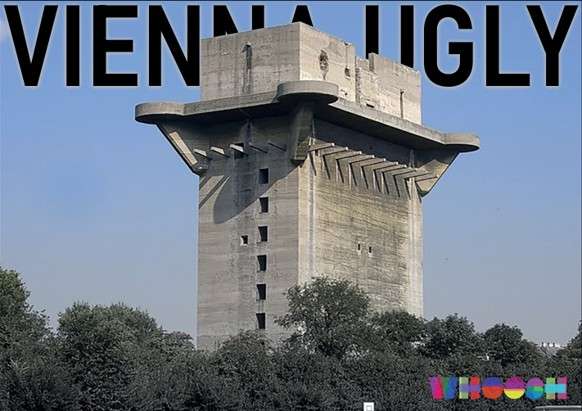
An alternative walking tour, where we walk past the beautiful buildings in Vienna, and focus on the loser architecture that nobody ever talks about. In particular, we look at the bad taste of rich people and institutions. It is humorous, but also refreshing, to learn how these structures were allowed, and how we can avoid making the same mistakes. Nazi tower, five-star hotel, government ministry, postmodernism. We started with the aim to get locals to see their home from new perspectives, and fight against kitsch tourist images. The tour has featured in Guardian, Zeit, Arte and USA Today. The group votes and debates the aesthetics of each choice. Beauty can be boring, but ugly never is.
Tour Guide
Registration and attendance
- End Point: Radetzkystrasse 2, 1030 Vienna
- 10€ per person
- Costs to be paid in cash at the meeting point.
Smells like Wien Spirit
Date, time and meeting point
- 18 July
- 14:30 - 17:00
- Meeting point: University of Vienna main entrance, Universitätsring 1, 1010 Vienna
Excursion description
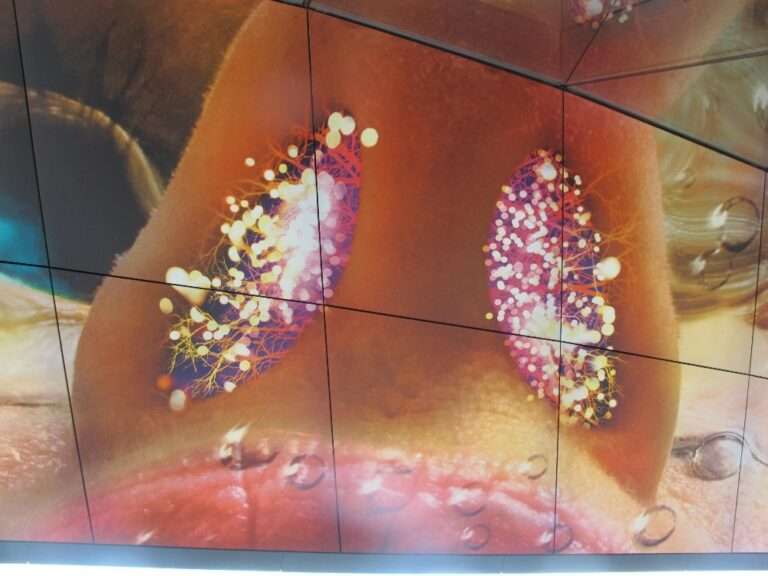
Why are there no smells walks of our city? Why do we think that cities must smell bad – when they mostly don’t? How has the city’s odour changed over the last 30 years? Which smells of 19th century Vienna remain, and what are the new signature scents of the city? Which smells have migrants brought with them? How do the smells vary across the seasons? Which are your guilty pleasure scents – those smells you are uncomfortable about enjoying?
Why do we mostly think of grass and trees when planning a walk, instead of architecture and people and LIFE? This is an urban adventure.
Tour Guide
Registration and attendance
- End Point: Brunnengasse 45, 1160 Vienna
- 10€ per person
- Costs to be paid in cash at the meeting point.
Social Housing (1)
Date, time and meeting point
- 19 July
- 10:00 - 13:15
- Meeting point: University of Vienna main entrance, Universitätsring 1, 1010 Vienna
Excursion description
Red Vienna’s social housing innovations continue to resonate around the world. Other cities are jealous of the achievements of that remarkable period. These visionary buildings still work well after 100 years, and we will explore why on this tour.
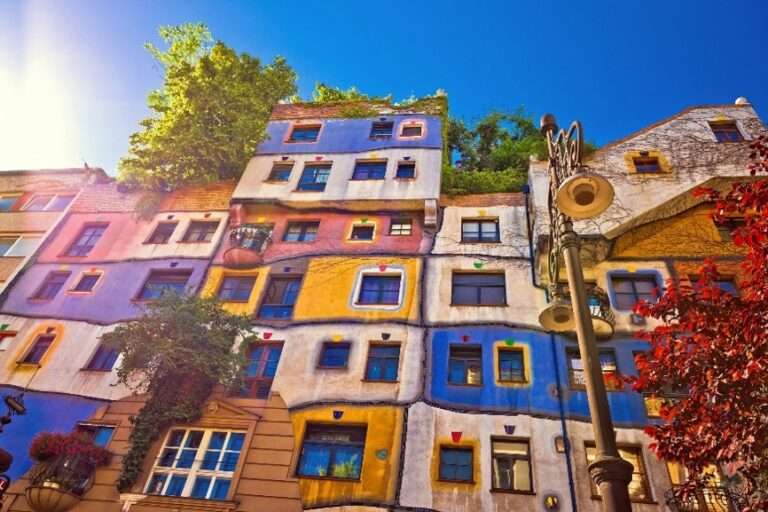
But the story continues, and so we will fast-forward to the 1980s, and a declining city up against the Iron Curtain. Our tour visits Friedensreich Hundertwasser’s Haus in Marxergasse.
And to bring things up to date, we visit a three year old house, in Favoriten, to look at new models of financing and experiments in social living.
Tour Guide
Registration and attendance
- End Point: Bloch-Bauer-Promenade 22, 1100 Vienna
- 10€ per person
- Costs to be paid in cash at the meeting point.
Introduction to the City: Classic Vienna with a twist
Date, time and meeting point
- 19 July
- 14:00 -16:15
- Meeting point: Karlskirche (St Charles Church), Karlsplatz (we meet on the main steps), 1040 Vienna
Excursion description
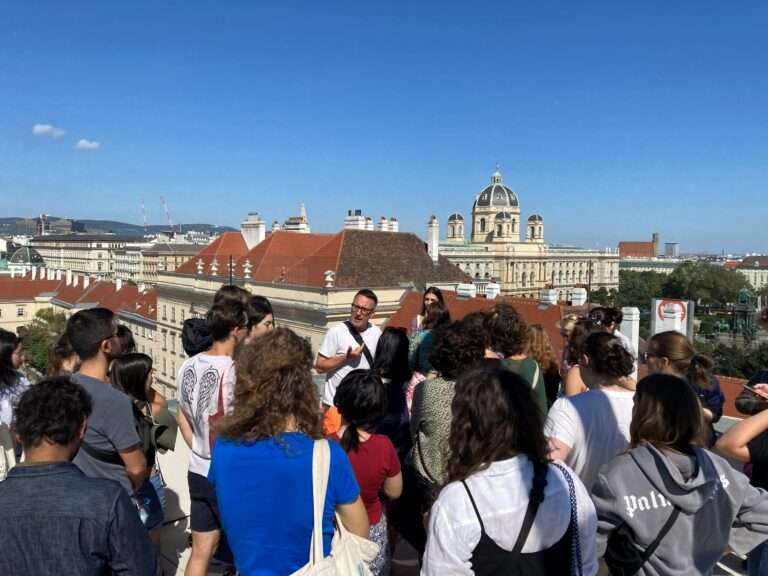
This is a classic introduction to Vienna tour – but the twist is that we visit the famous beauty of central Vienna, and learn the context, but at the same time, guide Eugene shows you contemporary ideas of city life and why Vienna is the best city in the world to live, in 2026. So there is a tension between what we hear, and what we see. Locals learn a lot, and it is a humorous walk.
Tour Guide
Registration and attendance
- End Point: Singerstrasse 9, 1010 Vienna
- 10€ per person
- Costs to be paid in cash at the meeting point.
Coffeehouse Conversations (Dinner)
Date, time and meeting point
- 19 July
- 19:00 - 21:15
- Meeting point: outside of Café Prueckel, Stubenring 24, 1010 Vienna
Excursion description
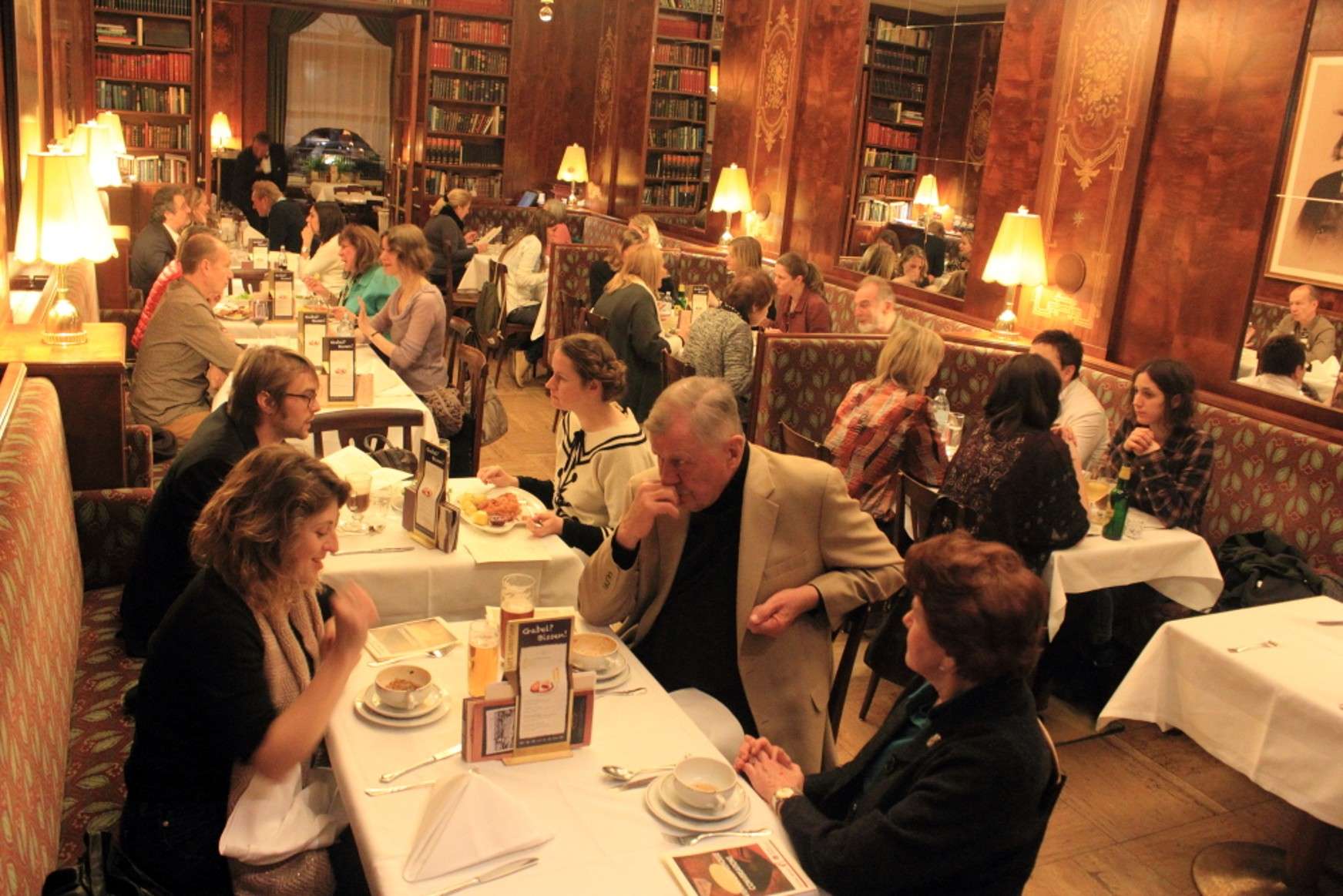
Strangers sit down to for dinner together, in a historic café, with a menu of questions to ask each other. The questions lead to storytelling, and participants, and the evening is an adventure in. We want to revive the spirit of debate that existed in the coffeehouses 100 years ago. Most conferences leave no trace in their host city, but we want to open up useful dialogue between residents and delegates.
Some questions on our menu will reflect the themes of RC21. Other questions explore travel, friendship, work and inspiration.
Previous dinners have led to weeks of email exchanges, where the pair continued to discuss the ideas presented.
Coffeehouse Conversations build on Oxford University professor Theodore Zeldin’s Conversation Meals, which have taken place as part of street festivals, in art galleries from London to Singapore, and at the World Economic Forum in Davos.
The Guardian visited this event in 2018, and wrote some lovely analysis of the experience.
Tour Guide
Registration and attendance
- End Point: Café Prueckel, Stubenring 24, 1010 Vienna
- 10€ per person
- Costs to be paid in cash at the meeting point.
Affordable Housing under Pressure? The Green Transition in Vienna’s Old and New Neighbourhoods
Date, time and meeting point
- 19 July
- 14:00 - 17:00
- Meeting point: Str. d. Wiener Wirtschaft 1, 1020 Wien (Station: Praterstern)
Excursion description
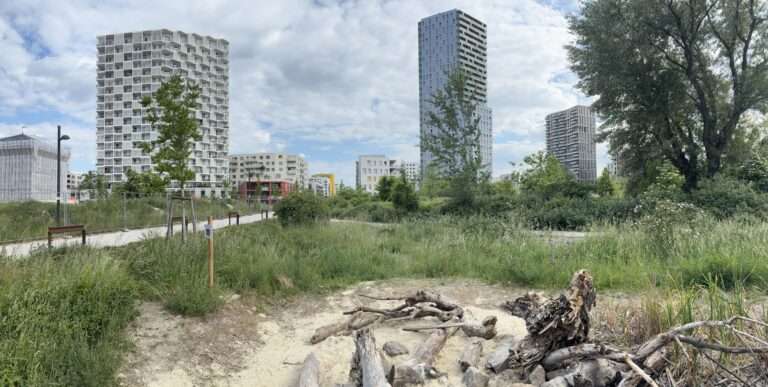
This field trip explores how Vienna navigates the tensions between housing affordability and the climate crisis. Focusing on the Nordbahnhof redevelopment area and the historic neighbourhood of Alliiertenviertel, participants encounter contrasting urban fabrics: from challenges of greening and decarbonising the historic private rental housing to newly built neighbourhoods that mix subsidised and private developments.
Through on-site observation and discussion, the tour examines key questions of housing inequality and the green transition: how affordability is maintained or undermined through retrofitting, densification and urban greening? How do different tenure segments particularly the private rental sector and limited-profit housing shape unequal outcomes? And to what extent do planning frameworks, land policies and the Vienna housing subsidy scheme enable inclusionary development while potentially reproducing new socio-spatial inequalities?
Tour Guides
Registration and attendance
- End Point: Praterstern, 1020 Vienna
- 10€ per person
- Costs to be paid in cash at the meeting point.
Vienna Housing Model and SchloR – Self-determined asset lock rental housing
Date, time and meeting point
- 20 July
- 13:45 - 16:00
- Meeting point: University of Vienna main entrance, Universitätsring 1, 1010 Vienna
Excursion description
A tour through the habiTAT project SchloR plus discussion about the current housing system in Vienna
About SchloR – a European Collective Housing Award Finalist 2024:
No private ownership. No resale. No profit from rent. A circus hall, a workshop, a community kitchen, and around 20 people living and many more working together on a 3,000m² site in Vienna’s 11th district.
SchloR – Schöner Leben ohne Rendite – is part of the habiTAT solidarity network, which adapted the structures of the German Mietshäusersyndikat for Austria. The model is legally constructed to prevent speculation: residents and the association jointly establish a limited company to purchase the property through direct loan campaigns. HabiTAT holds a veto on any future sale. The land is permanently removed from the market.
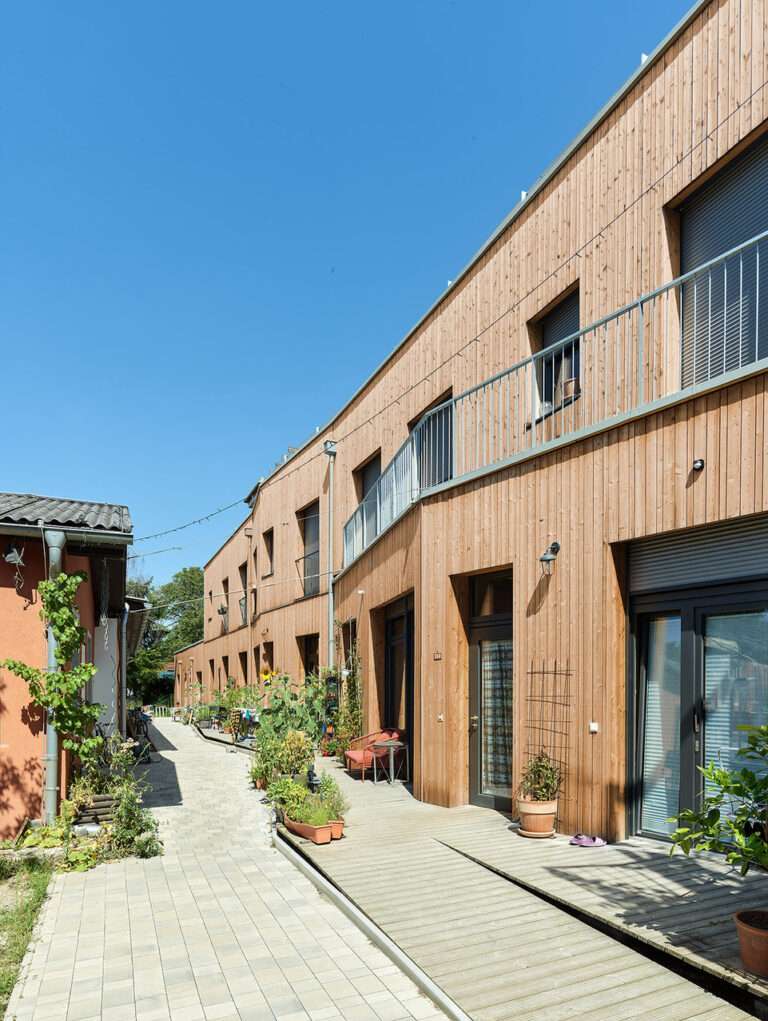
The architecture, completed in 2023, followed the same logic as the ownership model: careful use of resources at every stage. Existing buildings were kept, refurbished, extended. New additions were built in straw-insulated timber frame construction. All building footprints were retained; asphalt was removed by hand and outdoor spaces fully unsealed. The site is now largely self-sufficient – air-water heat pump, solar energy, rainwater collection for sanitary use and green roofs.
The result is a small city within a city: co-living units, a non-profit circus centre, workshops, rehearsal rooms, ateliers – affordable spaces for residents and neighbours alike.
Tour Guide
Registration and attendance
- End Point: Rappachgasse 26, 1030 Vienna Home • SchloR
- 10€ per person
- Costs to be paid in cash at the meeting point.
Danube Canal Graffiti Walk
Date, time and meeting point
- 20 July
- 13:45 - 15:45
- Meeting point: University of Vienna main entrance, Universitätsring 1, 1010 Vienna
Excursion description
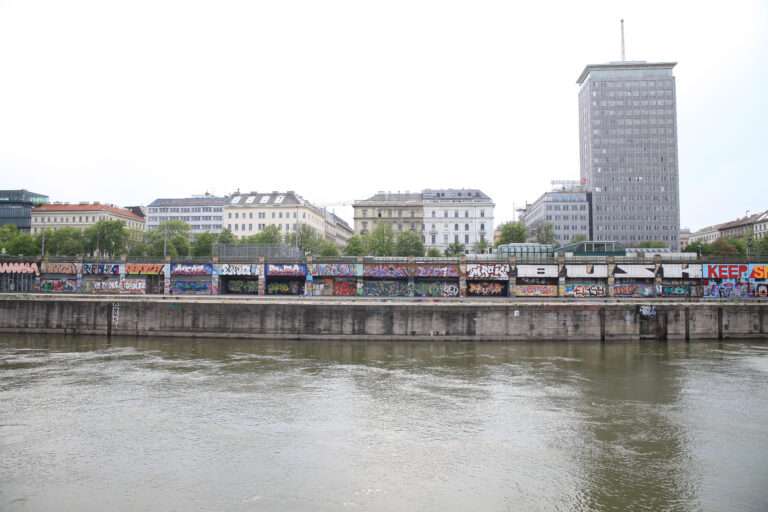
Our tour takes us to the Viennese graffiti and street art hotspot: the Danube Canal. There, the often artistic, sometimes socially critical murals stretch for several kilometers. Even though only a part of the area has been officially designated for graffiti artworks, an urban center of Austrian graffiti culture has developed here over the last two decades.
However, most of the works are very ephemeral and new artworks are created here daily. During our walk, we will examine and explain the various manifestations of this culture. In particular, we will explore how illegal graffiti art has gained widespread acceptance in this location, enhancing and revitalizing the area.
Tour Guide
Registration and attendance
- End Point: University of Vienna main entrance, Universitätsring 1, 1010 Vienna
- 15€ per person
- Costs to be paid in cash at the meeting point.
Inequality and Livability (1)
Date, time and meeting point
- 20 July
- 13:45 - 16:00
- Meeting point: U2 metro station Museumsquartier, Exit: Mariahilferstrasse
Excursion description
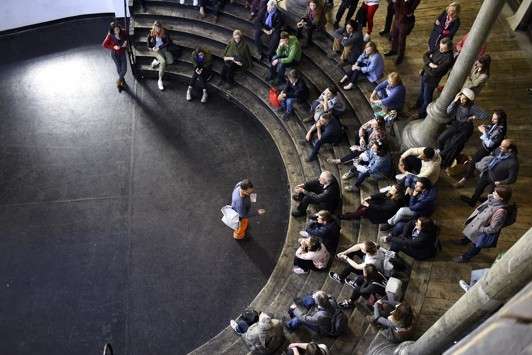
Vienna’s international profile is dominated by its golden age, before 1914, and yet this is one of the fastest-growing cities in the EU. On this tour, we look critically at the concept of liveability, and how to compare cities across the globe. Why does Vienna regularly rank as one of the 2 best cities in the world to live? What remains of the adventurous, socialist government between the wars? We will walk through residential districts in the west, discussing culture, green space, food, location, education, housing, architecture, mobility, music and calm.
Tour Guide
Registration and attendance
- End Point: University of Vienna main entrance, Universitätsring 1, 1010 Vienna
- 10€ per person
- Costs to be paid in cash at the meeting point.
Gender and the City
Date, time and meeting point
- 20 July
- 16:15 - 19:00
- Meeting point: University of Vienna main entrance, Universitätsring 1, 1010 Vienna
Excursion description
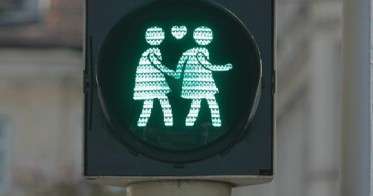
Vienna is recognised internationally as a pioneer city for its approach to including women’s needs into planning and budget decisions. Mariahilf was selected as a district to experiment with many progressive ideas, which have now been adopted across the city. Please join us for a look into the past, present and future of Vienna, and how the city seeks more social justice through better public space, mobility, nature, comfort and a more friendly, social, supportive place to live. We look forward to hearing your perspectives. And this is a lovely place to walk through. This is a tribute to Eva Kail, who is retiring, and you will hear so much about her on the walk. Walk leader Eugene is known for his Feminism for Men walks for schools, to counter the rise of toxic masculinity influencers online.
Tour Guide
Registration and attendance
- End Point: Haus des Meeres, Esterhazy Park, 1060 Vienna
- 10€ per person
- Costs to be paid in cash at the meeting point.
Fighting for Equal Work in the City
Get to know the FAKTory (of the Vienna Camber of Labour)
Date, time and meeting point
- 20 July
- 16:30 - 18:30
- Meeting point: University of Vienna main entrance, Universitätsring 1, 1010 Vienna
Event description
What does it take to create fair and inclusive working conditions in today’s cities, especially in Vienna? Join us for a visit to the FAKTory, innovation and networking hub of the chamber of labour in Vienna. Located right next to the University of Vienna in the FAKTory, new ideas and alliances are being developed to address the challenges of a changing world of work. Through conversations with representatives of the chamber of labour and of trade unions, researchers, and platform workers, participants will gain first-hand insights into ongoing struggles and innovative approaches to promoting equality, representation, and decent work in urban labour markets.
With:
- Malena Haas (Vienna Chamber of Labour, FAKTory)
- Sara Hassan (author “Wer Gegen wen?”)
- Robert Walasinski (Riders Collective; initiative of bike messengers)
Moderation
Mara Verlič & Christian Pichler (Vienna Chamber of Labour)

Registration and attendance
- Free (sponsored by the Vienna Chamber of Labour)
- There is no limit on the number of participants for this event.
Pluriversal Perspectives on Inhabiting Vienna: a City Journal Fringe
Date, time and meeting point
- 20 July
- 17:00 - 19:00
- Meeting point: University of Vienna main entrance, Universitätsring 1, 1010 Vienna
Excursion description
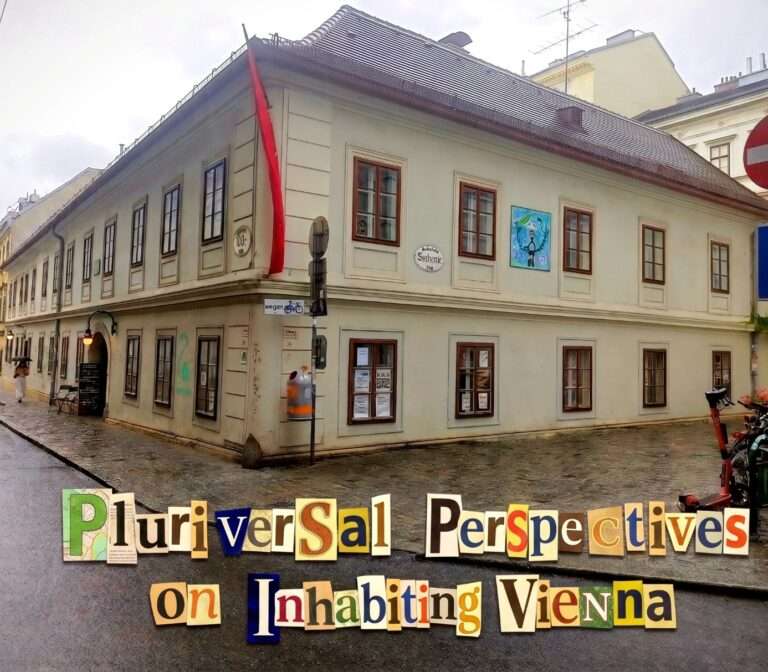
This Fringe Event engages with grassroots spatial appropriations in Vienna, thereby pluralizing dominant narratives of urban inhabitation and expressions of the Right to the City beyond its well-known social housing programmes. This event embraces the pluriversal ethos of City, recognising that knowledge production should move beyond the confines of academic conferences and emerge from diverse, situated practices and voices.
The programme consists of two parts. First, a guided walk around the historical and cultural center “Kulturzentrum Spittelberg im Amerlinghaus”, 51 years after the space was first occupied in 1975. Second, a collaborative workshop to bring together people and urban collectives from and beyond the RC 21 conference participants. By focusing on both historic and recent initiatives, the session examines the ongoing tensions between invited and claimed spaces of participation, asking what it means to inhabit the city.
Tour Guide
Urban Sustainability Living Lab, University of Vienna, City journal, Research Platform “The Challenge of Urban Futures”
Registration and attendance
- End Point: Amerlinghaus: Stiftgasse 8 - 1070 Wien, Armelinghaus
- The Fringe Event will be sponsored by the City journal. Donations to Amerlinghaus and to the collectives involved can be made at the end of the event on a voluntary basis.
Inequality and Livability (2)
Date, time and meeting point
- 21 July
- 13:45 - 16:00
- Meeting point: University of Vienna main entrance, Universitätsring 1, 1010 Vienna
Excursion description
Vienna’s international profile is dominated by its golden age, before 1914, and yet this is one of the fastest-growing cities in the EU. On this tour, we look critically at the concept of liveability, and how to compare cities across the globe. Why does Vienna regularly rank as one of the 2 best cities in the world to live? What remains of the adventurous, socialist government between the wars? We will walk through residential districts in the west, discussing culture, green space, food, location, education, housing, architecture, mobility, music and calm.
Tour Guide
Registration and attendance
- End Point: University of Vienna main entrance, Universitätsring 1, 1010 Vienna
- 10€ per person
- Costs to be paid in cash at the meeting point.
Social Housing (2)
Date, time and meeting point
- 22 July
- 10:00 - 13:15
- Meeting point: University of Vienna main entrance, Universitätsring 1, 1010 Vienna
Excursion description
Red Vienna’s social housing innovations continue to resonate around the world. Other cities are jealous of the achievements of that remarkable period. These visionary buildings still work well after 100 years, and we will explore why on this tour.
But the story continues, and so we will fast-forward to the 1980s, and a declining city up against the Iron Curtain. Our tour visits Friedensreich Hundertwasser’s Haus in Marxergasse.
And to bring things up to date, we visit a three year old house, in Favoriten, to look at new models of financing and experiments in social living.
Tour Guide
Registration and attendance
- End Point: Bloch-Bauer-Promenade 22, 1100 Vienna
- 10€ per person
- Costs to be paid in cash at the meeting point.
Hostile Design
Date, time and meeting point
- 22 July
- 15:30 - 18:00
- Meeting point: University of Vienna main entrance, Universitätsring 1, 1010 Vienna
Excursion description
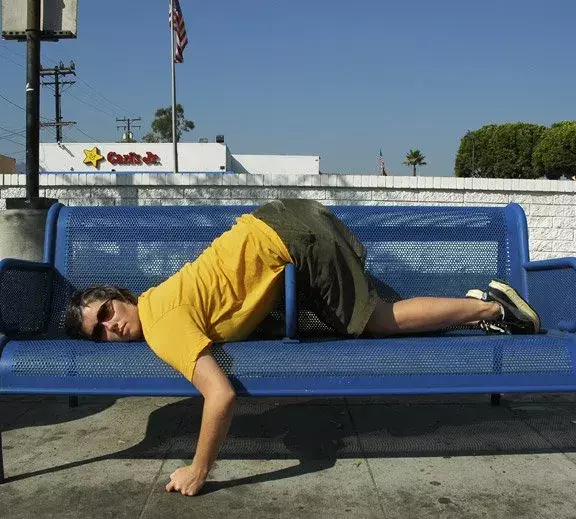
In a fast-growing city, where we all must live more densely together, it is important that public space is well-designed and inclusive. Praterstern railway station used to be a place where various marginalised groups would socialise, and access showers, food, mental health services and toilets. But since heavy new policing, and an alcohol ban in 2018, the social mix at the station has changed.
Hostile Design – sometimes called Hostile Architecture – is a modern phenomenon where spaces are made less inviting to people experiencing homelessness, but also poorer people and youth (through high-pitched sound), since they cannot sit, lie, or even stand comfortably on these surfaces (benches, walls, even floors), unless they consume something. And a lack of comfortable seating opportunities affects all kinds of groups, including elderly people, people with disabilities, tired workers, pregnant women, people caring for young children. The repeated announcements on public transport quickly become irritating to those who spend more time on there.
Most buildings have limited accessibility for people who use wheelchairs, those with children in buggies, blind people, etc. Architects and spatial-planners often make their spaces deliberately difficult for skaters to play on.
We have all had the experience of walking between tall buildings and being confronted with uncomfortable wind. Or darker surfaces which get so hot in sunshine that we cannot sit on them.
What are the features which encourage us to spend more time in public space? Trees and shade, good seating, playful features, access to water and toilets, beauty and other people. Vienna has done some good work in the new millennium to invite more people to spend time outside, with each other, enjoying the new urbanism. But nobody has told so many banks, hotels and shopping centres about this trend towards softer, more sympathetic spaces.
Hostile design can be seen in New York’s former traffic commissioner Robert Moses designing a stretch of Long Island Southern State Parkway with low stone bridges so that buses could not pass under them. This made it more difficult for people who relied on public transport (mainly African Americans), to visit the beach that wealthier car-owners could visit. Social control could also be seen in the change from narrow streets in 19th century Paris getting widened, to help the military end protests quickly.
Tour Guide
Registration and attendance
- End Point: Karlsplatz
- 10€ per person
- Costs to be paid in cash at the meeting point.
City Walk Karl Marx-Hof + Museum (1)
Date, time and meeting point
- 22 July
- 15:30 - 17:00
- Meeting point: Train station Heiligenstadt (Exit: 12.-Februar-Platz) at the bus station
Excursion description
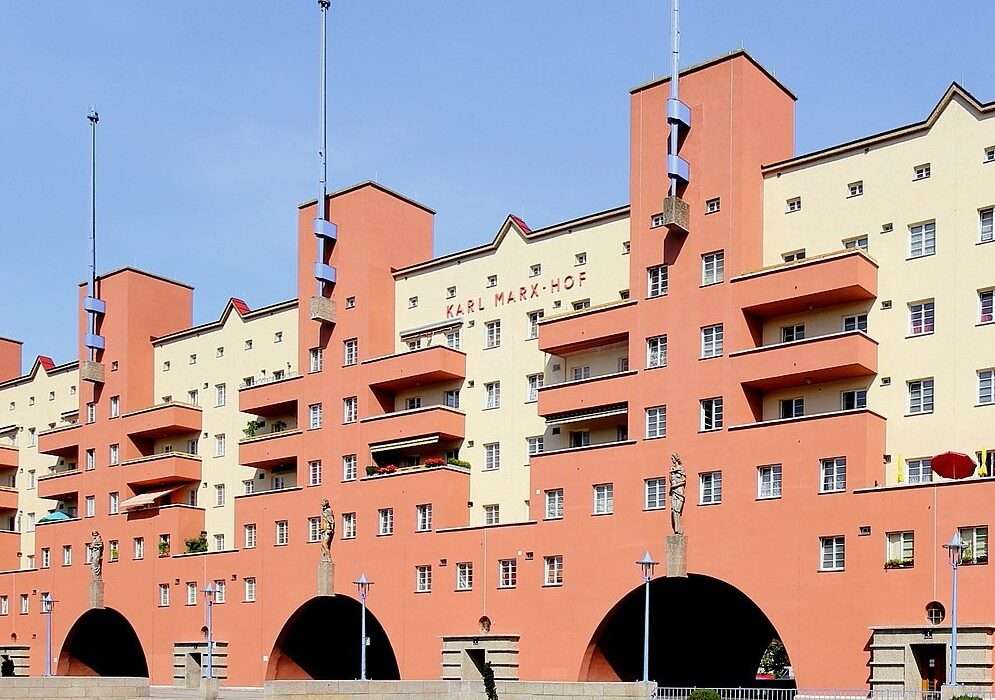
Leaving the Habsburg Empire behind, Vienna holds its first free communal elections on May 4th 1919. It becomes the first city of over a million inhabitants to appoint a social democratic administration, whose work between 1919 and the disruption of democracy in February 1934 is to earn much international acclaim.
The “New Vienna” is a unique socio-political experiment, as it embraces and reforms all spheres of life – from social and health policy to education and housing.
The permanent exhibition “Red Vienna” is located on the first and the top floors of Washhouse No.2, where originally the bathtubs and showers were accommodated, as well as the water reservoir.
Tour Guide
Registration and attendance
- 15€ per person
- Costs to be paid in cash at the meeting point.
- This excursion will be cancelled if less than 10 participants register.
City Walk Karl Marx-Hof + Museum (2)
Date, time and meeting point
- 23 July
- 10:00 - 11:30
- Meeting point: Train station Heiligenstadt (Exit: 12.-Februar-Platz) at the bus station
Excursion description
Leaving the Habsburg Empire behind, Vienna holds its first free communal elections on May 4th 1919. It becomes the first city of over a million inhabitants to appoint a social democratic administration, whose work between 1919 and the disruption of democracy in February 1934 is to earn much international acclaim.
The “New Vienna” is a unique socio-political experiment, as it embraces and reforms all spheres of life – from social and health policy to education and housing.
The permanent exhibition “Red Vienna” is located on the first and the top floors of Washhouse No.2, where originally the bathtubs and showers were accommodated, as well as the water reservoir.
Tour Guide
Registration and attendance
- 15€ per person
- Costs to be paid in cash at the meeting point.
- This excursion will be cancelled if less than 10 participants register.
About the tour guides
Eugene Quinn
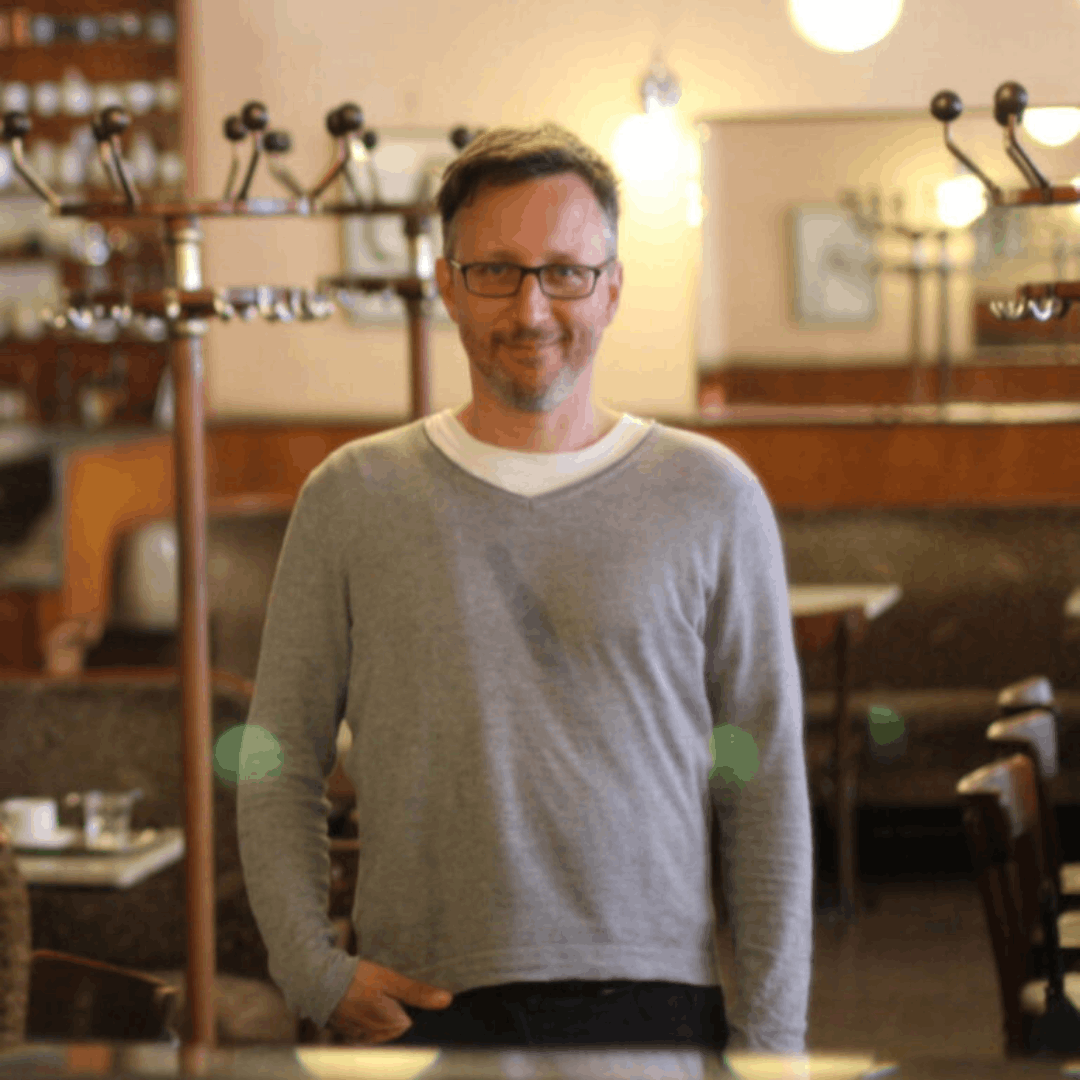
Eugene is a London-born, Vienna-based urbanist and DJ. He created political culture group Whoosh in 2020, with eight friends, to play with the city, build social capital & send out new political messages. Projects include Vienna Walking Week, magdas Social Dinners (refugees dine with locals), #HowtobeAustrian for Oe1 radio, Vienna Ugly tour, Jungerer Seestadt (kids show adults around Aspern), the Austrian Citizenship Test as pub quiz for Vienna Design Week, & Vienna Coffeehouse Conversations. His work has featured in New York Times, Guardian & Die Zeit. He walks 9km each day, and is passionate about public space & how to animate & celebrate it.
Judith Lehner & Michael Friesenecker
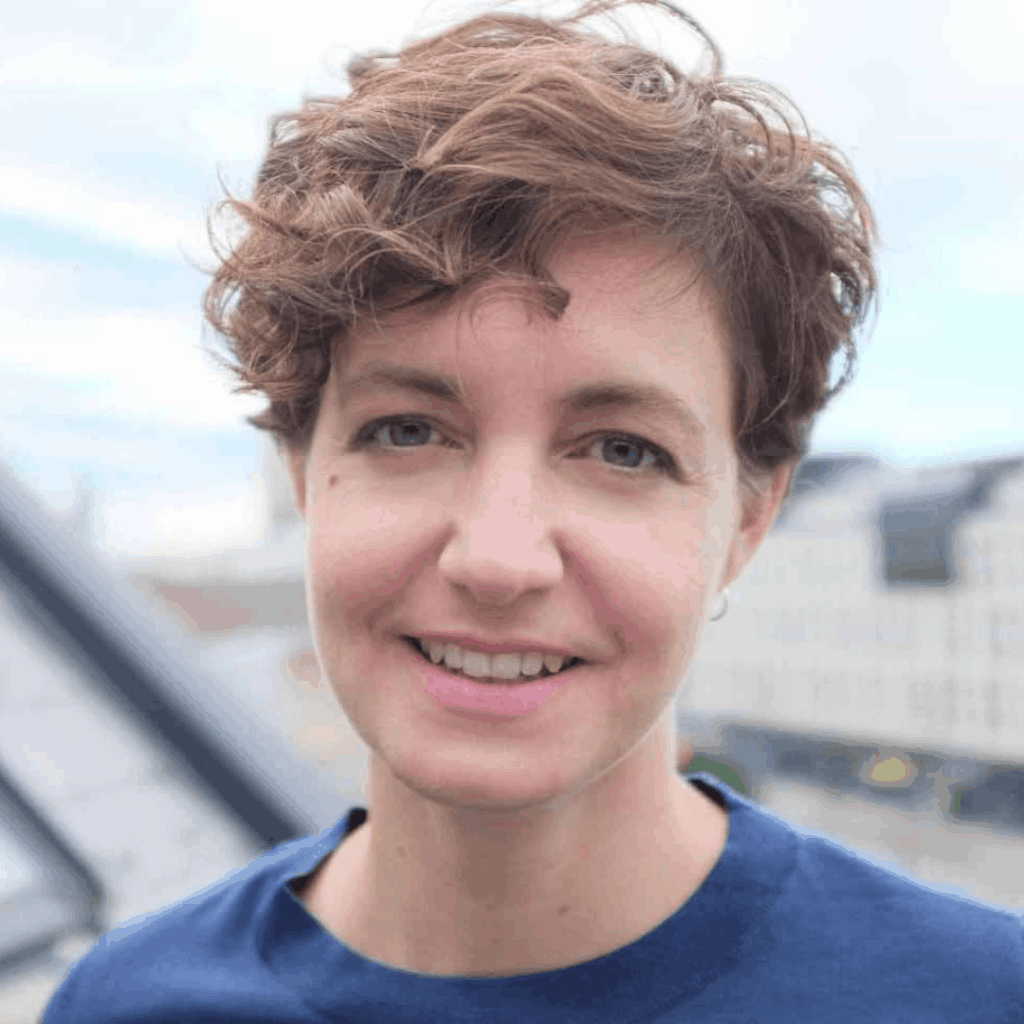
Judith Lehner (PhD) heads the Research Center for New Social Housing at the Vienna University of Technology (TU Wien) and conducts research at the Social Design Studio at the University of Applied Arts Vienna. As an urban planner, she examines transformation processes in the context of social crises and researches collective living spaces in Latin American and European cities.
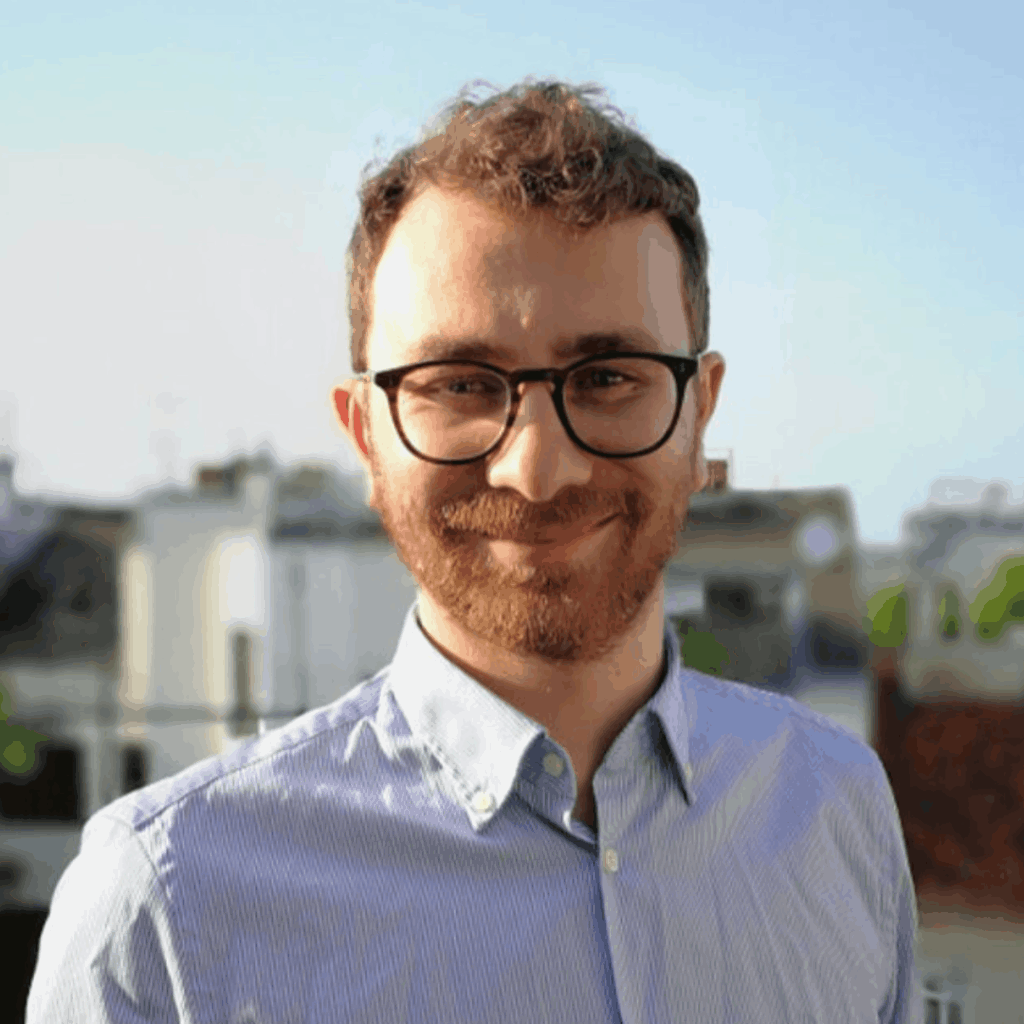
Michael Friesenecker is a postdoctoral researcher at the Institute of Landscape Planning at BOKU University and the future.lab Research Center for New Social Housing at TU Vienna. As an urban geographer and spatial researcher, his research focuses on the intersection of urban planning, housing policy, and climate policy and their social and spatial impacts. His recent work examines the governance of urban greening, densification, and the decarbonisation of the building sector, with particular attention to preventing adverse socio-spatial effects such as green gentrification.
Gabu Heindl
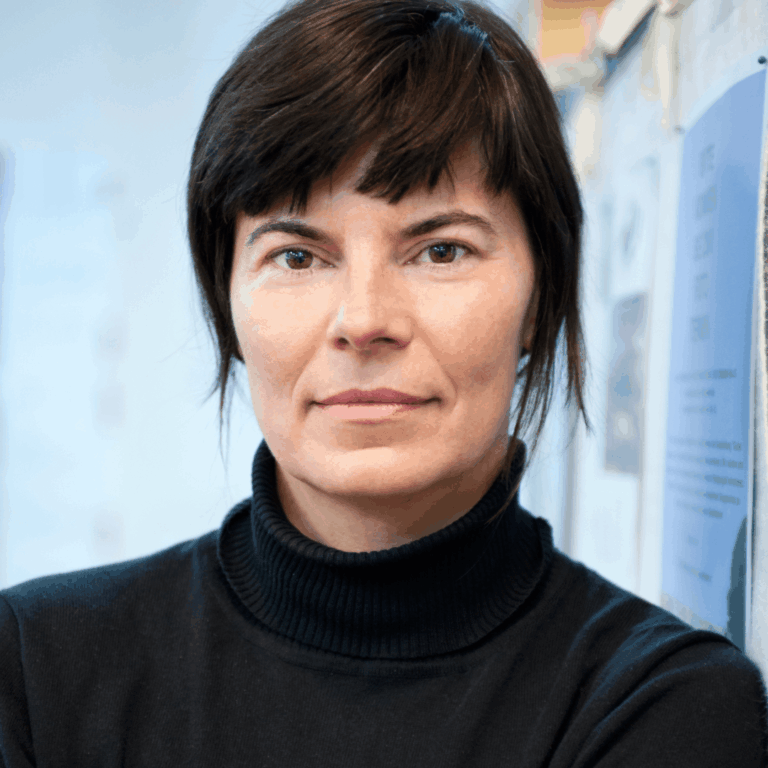
Prof. Dr. Gabu Heindl (Head of Office)
Architect, PhD Mag.Arch., M.Arch.II
Civil engineer
Gabu Heindl is an architect, urban planner and activist in Vienna. As professor at the faculty of architecture she is heading the design and research department ARCHITECTURE CITIES ECONOMIES | Building Economy and Project Development the University of Kassel.
Her office GABU Heindl Architecture focuses on public space, public buildings, common-ownership and non-market housing as well as collaborations in the fields of history politics and critical artistic practice. From 2013 to 2017 she was chair of the ÖGFA – Austrian Society for Architecture.
Gabu has obtained a doctorate in Vienna and studied architecture in Vienna, Tokyo and Princeton. From 2018 to 2021 she was Visiting Professor at Sheffield University with a research focus on Urban Commons and subsequently Professor of Urban Design at TH Nuremberg. 2019-2023 she was Unit Master at the Architectural Association School of Architecture (AA), London.
Gabu lectures frequently and has published numerous articles and books including the co-editing of Building Critique, Architecture and its Discontents, Spector Books 2019, the monograph Stadtkonflikte. Radikale Demokratie in Architektur und Stadtplanung, Mandelbaum 2020 (2022 3rd edition) and Nonsolution. Zur Politik der aktiven Nichtlösung im Planen und Bauen, Gabu Heindl, Drehli Robnik, adocs 2024.
Stefan Wogrin
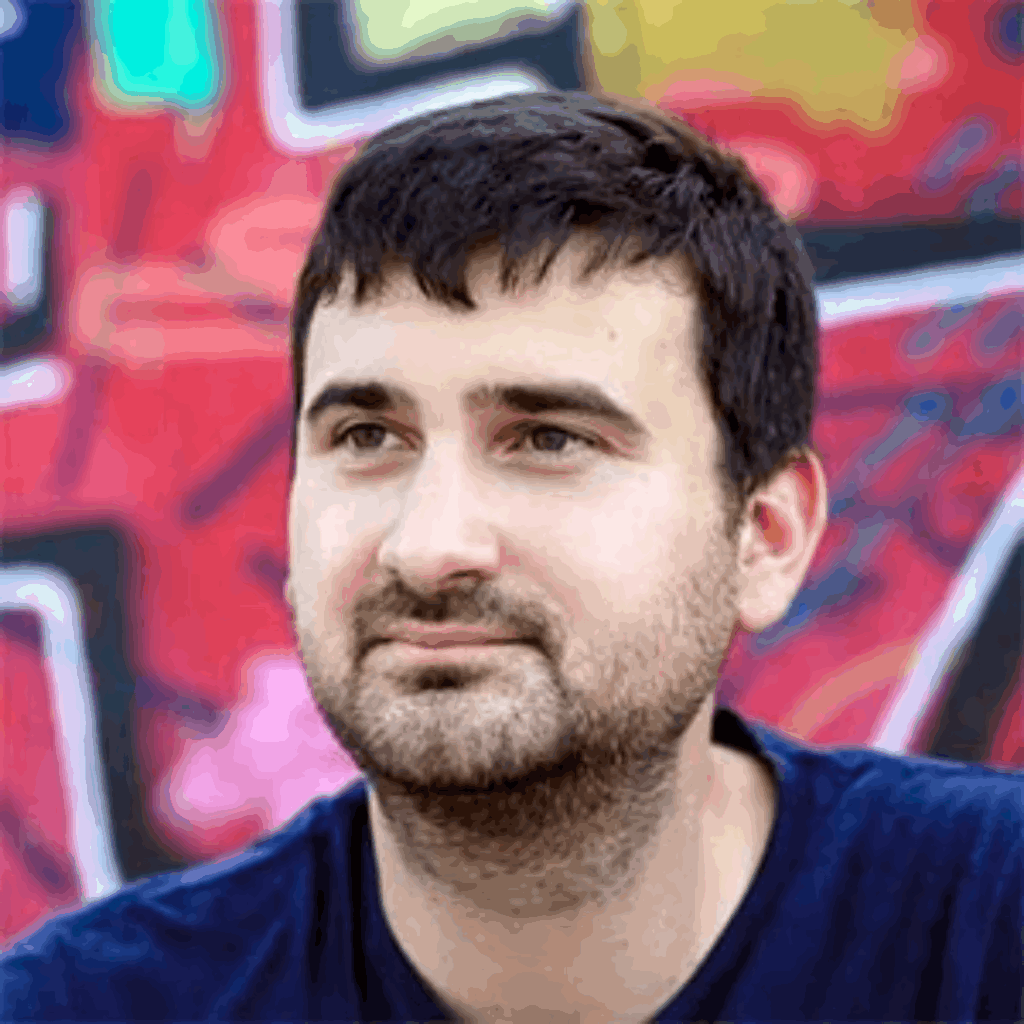
Stefan Wogrin is an art historian and graffiti documentalist. In 2001 he founded the graffiti writing archive ‘Spraycity’ (www.spraycity.at), which also includes an online platform where 170,000 graffiti photos are accessible. Since 2001, Stefan has been active as a graffiti writer himself. He also photographs graffiti on public spaces in Vienna and throughout Europe. Since 2013, the history of graffiti in the Austrian capital has been his research focus. Stefan has curated several graffiti exhibitions and is the editor of the ‘Offline Graffiti Magazine’ and author of the book series ‘Graffiti Wien’.
Lukas Gallee (Waschsalon)

“Leaving the Habsburg Empire behind, Vienna holds its first free communal elections on May 4th 1919. It becomes the first city of over a million inhabitants to appoint a social democratic administration, whose work between 1919 and the disruption of democracy in February 1934 is to earn much international acclaim.
The “New Vienna” is a unique socio-political experiment, as it embraces and reforms all spheres of life – from social and health policy to education and housing.
The permanent exhibition “Red Vienna” is located on the first and the top floors of Washhouse No.2, where originally the bathtubs and showers were accommodated, as well as the water reservoir. “
Urban Sustainability Living Lab
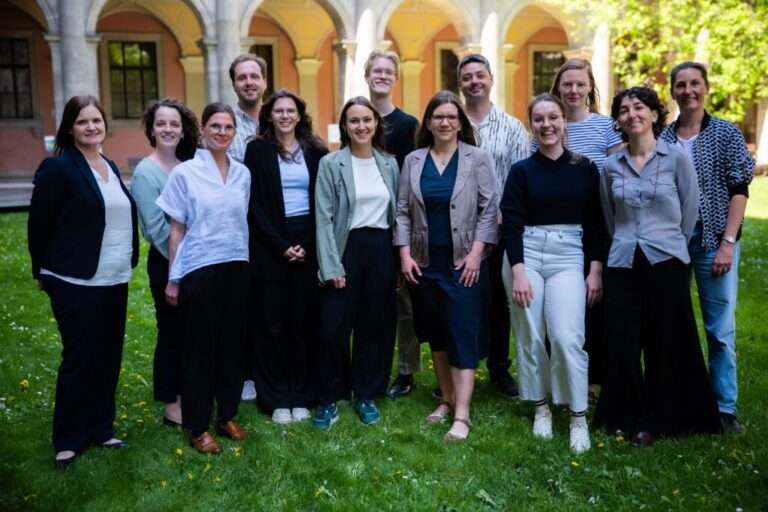
The USLL is part of the Urban Studies working group at the Department of Geography and Regional Research at the University of Vienna. It curates physical and social spaces of encounter to support urban sustainability transformations by integrating knowledge produced through inter- and transdisciplinary research and teaching.
Together with a wide range of urban actors such as city administrations, NGOs and civil society organisations, the USLL develops integrated solutions to contemporary urban challenges. The focus is on addressing context-specific challenges related to, among others, socio-spatial disparities, post-industrial urban development and environmental injustices in European, Caucasian and Latin American cities.